| Model | Brand | Battery Size (kWh) | Energy Consumption (kWh/100 km) |
|---|---|---|---|
| Neta V | Neta | 38.54 | 10.1 |
| Proton eMAS 7 Prime | Proton | 49.52 | 11.0 |
| Proton eMAS 7 Premium | Proton | 60.22 | 11.5 |
| GAC Aion Y Plus (Standard Range) | GAC | 63.2 | 12.9 |
| GAC Aion Y Plus (Extended Range) | GAC | 68.3 | 13.2 |
| BYD Dolphin | BYD | 44.9 | 13.8 |
| Xpeng G6 | Xpeng | 66 | 14.0 |
| MG4 EV (Standard Range) | MG | 51 | 14.0 |
| MG4 EV (Extended Range) | MG | 64 | 14.5 |
| BYD Atto 3 (Standard Range) | BYD | 49.92 | 14.5 |
| BYD Atto 3 (Extended Range) | BYD | 60.48 | 14.8 |
| Tesla Model 3 (Standard Range Plus) | Tesla | 54 | 14.9 |
| Tesla Model 3 (Long Range AWD) | Tesla | 82 | 15.2 |
| MG ZS EV | MG | 44.5 | 15.2 |
| BYD Seal (Standard Range) | BYD | 61.4 | 14.2 |
| BYD Seal (Extended Range) | BYD | 82.5 | 14.5 |
| Hyundai Kona Electric (Standard Range) | Hyundai | 39.2 | 14.3 |
| Hyundai Kona Electric (Extended Range) | Hyundai | 64 | 14.7 |
| Tesla Model Y (Long Range AWD) | Tesla | 75 | 15.7 |
| Hyundai Ioniq 5 (Standard Range) | Hyundai | 58 | 15.7 |
| Mercedes-Benz EQS 450+ | Mercedes-Benz | 107.8 | 15.7 |
| Hyundai Ioniq 5 (Extended Range) | Hyundai | 72.6 | 16.1 |
| Tesla Model Y (Performance) | Tesla | 75 | 16.2 |
| BMW iX3 | BMW | 80 | 17.6 |
| BMW i4 eDrive40 | BMW | 83.9 | 16.1–19.1 |
| Volvo EX30 (Standard Range) | Volvo | 51 | 17.1 |
| Volvo EX30 (Extended Range) | Volvo | 69 | 17.1 |
| Nissan Leaf | Nissan | 40 | 17.1 |
| Mercedes-Benz EQA 250 | Mercedes-Benz | 66.5 | 17.7 |
| BMW i7 xDrive60 | BMW | 101.7 | 18.5–22.3 |
| Mercedes-Benz EQB 350 4MATIC | Mercedes-Benz | 66.5 | 18.1 |
| Lexus RZ 450e | Lexus | 71.4 | 18.7 |
| Volvo C40 Recharge | Volvo | 78 | 19.8 |
| Volvo XC40 Recharge | Volvo | 78 | 20.0 |
| Porsche Taycan 4S (Standard Battery) | Porsche | 79.2 | 20.0 |
| Porsche Taycan 4S (Performance Battery Plus) | Porsche | 93.4 | 21.0 |
| Volvo EX90 | Volvo | 111 | 21.1 |
Category: Technology
-
BEV Battery Consumption Efficiency
-
My 30-Day Journey with the BYD Seal
Switching to an electric vehicle (EV) has been an exciting step forward, and spending the past 30 days driving the BYD Seal has been a journey of discovery. Covering more than 3,500 km, this experience has reshaped my perspective on EVs, their practicality, and the state of infrastructure in Malaysia.
I purchased the BYD Seal from Macinda EV, a BYD dealer in Kuantan. My sales agent, Ms Kalin, made the process smooth and efficient. She was incredibly nice, knowledgeable, and quick to address any concerns I had. It’s rare to find such outstanding service, and she made the transition to an EV much easier.
A Glimpse into the Future of Driving
What stood out immediately was the BYD Seal’s electronics and smart features. The seamless integration of the car with my phone and wearables has been a revelation. Controlling everything—whether unlocking the car, starting it, or monitoring its stats—feels like stepping into the future. The user-friendly system makes it clear that this is not just a car; it’s a smart device on wheels.
The car itself feels premium, a far cry from outdated stereotypes about Chinese products. BYD has proved that high quality can be affordable. The build is solid, the interior luxurious, and the performance impressive. The torque is exhilarating, and the confidence it gives when overtaking is unmatched. While I have a few complaints (more on that later), the overall package offers excellent value for money.
Planning Every Drive
However, driving an EV in Malaysia is all about planning. With the scarcity of EV chargers, even in a bustling city like Kuala Lumpur, charging requires forethought. Most chargers are still AC, meaning they take a long time to reach a useful level. While the EV landscape is improving, it’s far from ideal for spontaneous long drives.
The multitude of EV charger operators complicates things further. Each has its own app, making it necessary to juggle multiple platforms just to charge your car. This lack of standardisation is frustrating and adds unnecessary hassle. A recent trip highlighted another issue: poor telco coverage delayed my charging session because I couldn’t verify my identity or complete payment. It’s a reminder that EV charging isn’t just about having chargers; the surrounding infrastructure matters just as much.
The Infotainment Could Be Better
One area where BYD could improve is the infotainment system. Built on an Android platform, the interface feels very basic. The fonts, menus, and overall graphics are stock-standard and lack the polish expected from a car of this calibre. It’s an area that feels overlooked in an otherwise premium vehicle.
I’m also not a fan of the rotating screen. While it’s a unique feature, I’d prefer a screen tilted slightly towards the driver for better visibility and ease of use. The rotation adds novelty but doesn’t necessarily enhance functionality, especially when focusing on driving.
The Dashcam Dilemma
One surprising omission in the BYD Seal is the lack of a built-in dashcam. While BYD offers an upgrade to a front-view camera for an additional RM700, I opted to install my own two-channel camera for both the front and back. For those considering a similar route, note that the car’s fuse system uses Micro 2 type fuses, so you’ll need the appropriate tap cable and extra fuses for installation. Alternatively, the BYD camera is a good option if you prefer a sleek, hidden design.
It’s worth noting that newer BYD models, like the Sealion, come with better sensors akin to Tesla’s, improving safety and functionality significantly.
The Technical Details
One aspect that could use improvement is the onboard charger, which is capped at 7 kW. While I’ve opted for a 22 kW wallbox at home, it’s more of an investment for the future than a practical solution today, given the car’s current limitations. For a vehicle as advanced as the BYD Seal, a more robust onboard charger would have been appreciated.
No Going Back
Despite these challenges, driving an EV has been a transformative experience. The smoothness, quietness, and overall driving pleasure are unmatched by internal combustion engine (ICE) vehicles. Once you experience the immediacy and efficiency of an EV, it’s hard to go back. That said, practicality remains a concern, and for now, I still see the need to keep an ICE car as a backup for longer or more unpredictable journeys.
The Verdict
The BYD Seal has delivered far more than I expected, combining premium quality, smart features, and impressive performance at a reasonable price. While Malaysia’s EV infrastructure still has a long way to go, this car proves that EVs are not just the future—they’re the present.
If you’re in Kuantan and considering making the switch to an EV, I highly recommend Ms Kalin at Macinda EV. Her excellent service ensures a hassle-free experience. Additionally, if you’re exploring options, the new BYD Sealion 7 with its impressive 22 kW AC onboard charging capacity, Tesla-like sensors, and better infotainment is a great choice to consider. As the EV ecosystem evolves, the possibilities only grow more exciting.
-
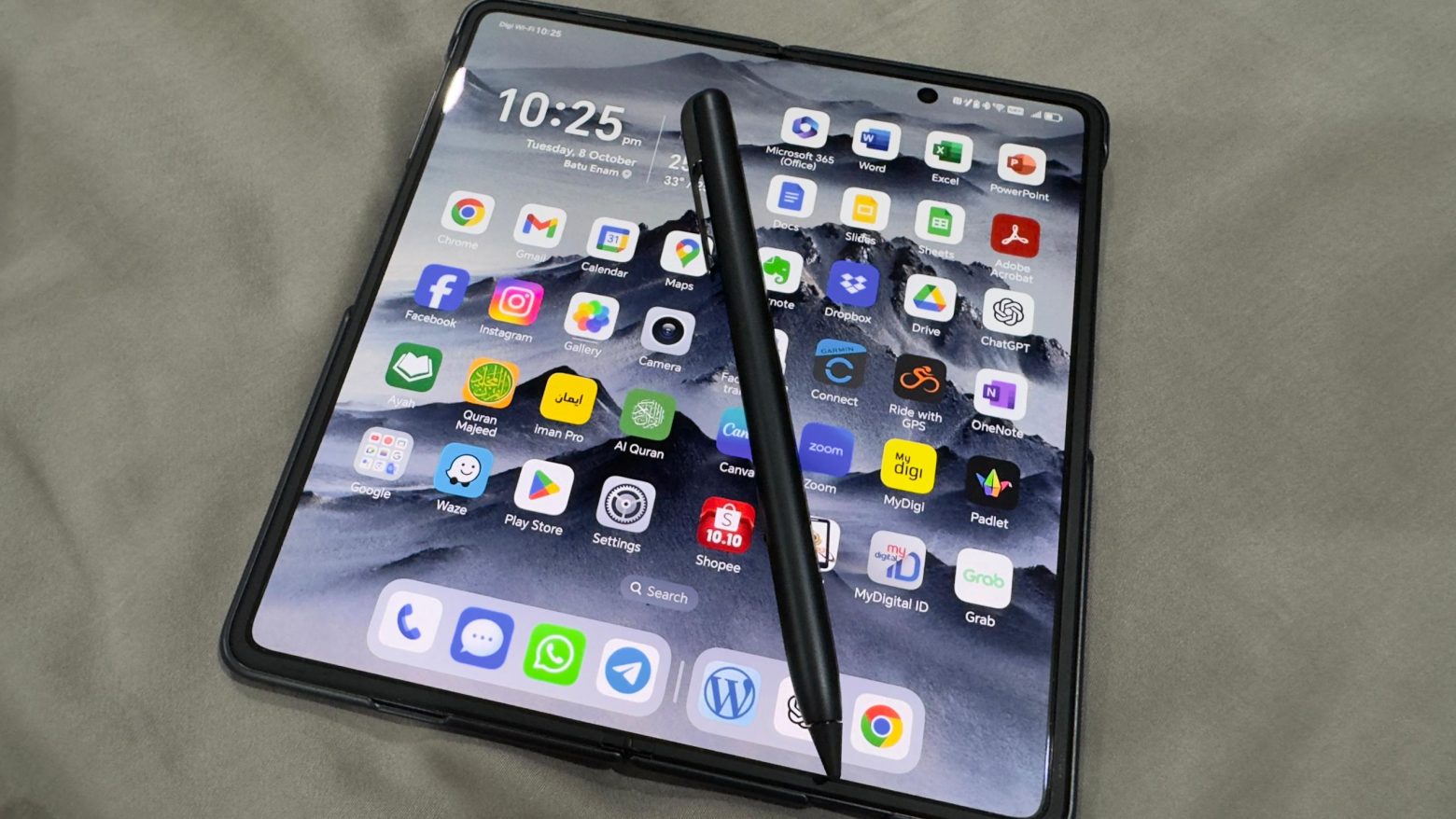
HONOR Magic V3 and Magic Pen
I recently purchased the HONOR Magic V3 alongside the Magic Pen, with hopes of enhancing my productivity, especially for document signing and note-taking. The Magic V3 is a strong performer with a great display, but there are a few areas where it hasn’t quite met my expectations.
Document Signing and Stamping Experience
A key reason for opting for the Magic V3 was the ability to sign documents directly on the phone, something I’ve found challenging. My workflow requires me to sign multiple documents, and ideally, I would like each document to have a unique, handwritten signature. This process has proven to be tricky, as I haven’t been able to find a suitable app on Android (or even iOS) that allows for this level of flexibility. Signing directly on the Magic V3 with the Magic Pen lacks the fluidity I was hoping for.Additionally, I often need to stamp documents using a digital name stamp. This adds another layer of complexity to the process, as finding software that allows me to sign and stamp documents easily, all in one go, has been difficult. Whether I’m using Android or iOS, no app so far has met both of these requirements. A solution that combines these features—unique signatures for each document and the ability to apply a digital stamp—would be a game changer.
Note-taking Experience
The handwriting experience on the Magic V3, particularly with Evernote, was also a bit of a letdown. It feels less responsive compared to Apple Notes on the iPad. I’ve since switched to Microsoft OneNote, which offers better syncing capabilities across devices, allowing me to streamline my workflow. Migrating my notes from Evernote and Apple Notes to OneNote has helped to create a more cohesive system for managing my notes.Android Auto vs. Apple CarPlay
In terms of integration with my car, I noticed that Android Auto feels less polished compared to Apple CarPlay. I’ve experienced issues like erratic volume control while using Android Auto, which interrupts the experience, making me miss the smoother interface of CarPlay.Final Thoughts
The HONOR Magic V3 is an impressive device in many ways, but for users like myself who need a seamless process for signing and stamping documents, it falls short. The Magic Pen is functional but doesn’t offer the precision or flexibility needed for these tasks. Finding a robust app that allows me to sign each document with a unique signature and apply a digital stamp remains a challenge on both Android and iOS. Despite these limitations, the device itself performs well, and I’ll continue searching for better software solutions to suit my needs.