Leadership in medicine does not begin with a title, an appointment, or a position of authority. It begins the moment a person chooses to serve others through the profession of medicine. From that point onwards, every doctor carries leadership responsibilities, whether visible or not, formal or informal, recognised or unnoticed. Leadership is not something added to a medical career, it is woven into it and practised daily across a lifetime.
Competence is the head of leadership. A doctor who leads must first be able to do, not merely instruct. Competence allows a leader to think clearly, decide wisely, and act safely. Leadership without competence erodes trust and places others at risk. In the life of a doctor, competence is practised continuously. As a medical student, it is shown through preparation for ward rounds, knowing one’s patient thoroughly, taking responsibility for learning, and helping peers understand without being asked. As a house officer or junior doctor, competence is demonstrated by performing the procedures one expects others to do, personally checking investigations, recognising limitations early, and seeking senior input before harm occurs. As a specialist or senior doctor, competence means remaining clinically relevant, staying updated with evidence, guiding complex cases by example, and making sound decisions during uncertainty. Competence is not optional, it is part of the amanah entrusted to every doctor.
Compassion is the heart of leadership. Leadership is not about being served, it is about serving. Compassion allows a leader to understand the people they serve before making decisions that affect them. In the daily life of a doctor, compassion begins with patients. It is expressed by listening before deciding, explaining diagnoses and plans even when time is limited, and recognising fear, pain, and uncertainty alongside clinical findings. Compassion extends to colleagues and healthcare workers. It is shown by understanding workload and fatigue, correcting mistakes privately rather than humiliating publicly, supporting nurses and allied health professionals, and fostering a safe working environment. In leadership roles, compassion means understanding the impact of policies on people before implementing change, doing the best sincerely without seeking recognition, and remembering that recognition, if it comes, is only a bonus. Without compassion, leadership becomes mechanical and disconnected from those it is meant to serve.
Conscience is the soul of leadership. It is the inner compass that keeps a doctor accountable to Allah above all else. Leadership guided by conscience requires moral courage and clarity. In a doctor’s life, conscience is tested in moments of pressure and power. It is practised when patient safety is prioritised despite inconvenience, when one speaks up against unsafe practices, and when ethical principles are upheld even at personal cost. As authority increases, conscience is reflected in resisting misuse of power, acting with integrity when no one is watching, and remaining sincere when recognition or reward is absent. Towards the later stages of leadership roles, conscience is shown by preparing successors, mentoring juniors, and being ready to let go of position willingly. Leadership is temporary, accountability is not.
Leadership as a doctor is not measured by how long one holds power or how many titles one accumulates. It is measured by how faithfully the trust was carried across a lifetime of service. When competence guides the head, compassion shapes the heart, and conscience anchors the soul, leadership becomes not only effective, but meaningful and sincere. This is leadership that honours the profession, serves humanity, and seeks only the acceptance of Allah.
Speech to the MBBS Graduates of the Kulliyyah of Medicine, IIUM 2025
My dear graduates,
Today is a moment of deep significance — not just for you and your families, but for all of us at the Kulliyyah of Medicine. We come together to celebrate your journey, your sacrifices, and your growth. But more than that, we celebrate the beginning of your noble path ahead as doctors who will serve not just with skill, but with soul.
At IIUM, we have always aspired to produce more than just competent doctors. We have aspired to nurture healers. Healers who see their work as an act of worship. Healers who recognise that every breath of a patient, every touch of healing, every word of comfort — is part of their ibadah. This is what we mean when we say: medicine with a soul.
In our Kulliyyah, we uphold a Tawhidic epistemology — a worldview where all knowledge comes from Allah and must lead back to Him. Tawhid is not only the foundation of our faith; it is the foundation of how we teach, how we learn, and how we serve. And so, when you step into the hospital or the clinic, you do so not only as a professional, but as someone who carries the weight of trust — a trust from Allah, a trust from the ummah.
You are graduating into a world that is in need of people who are not only skilled, but principled. Not only precise, but compassionate. Not only efficient, but ethical. That is why we remind you — competence, compassion, and conscience must always go together. They are not three separate paths. They are one.
Competence is the foundation. It is your clinical judgment, your scientific knowledge, your professional performance. It is the standard we all expect of you. It is what allows your patients to trust you. But competence alone is not enough.
Compassion is the heartbeat of medicine. Without it, even the best treatment feels cold. With it, even simple care can become transformative. And yet, compassion will be tested. There will be moments when you feel exhausted, discouraged, or detached. That is when you must renew it — by returning to Allah, by recalling your niyyah, by reminding yourself that you are here to serve.
Conscience is your internal compass. It is the integrity you uphold when no one is watching. It is your fear of Allah and your love for the truth. It will protect you when systems fail you. It will anchor you when everything else becomes uncertain.
You chose this path because you felt a calling. A desire to help. A desire to heal. That desire must always be kept alive, not for applause or accolades, but because you see this profession as part of your faith. That is what makes your work sacred. Every diagnosis you make, every decision you take, is an act of responsibility and submission.
The world will not always be kind. The job will not always be easy. There will be pressure, bureaucracy, burnout. And yet, I want you to remember — compassion is not finite. It can be replenished. Through prayer. Through rest. Through reflection. When you feel tired, do not only rest your body. Rest your heart in the remembrance of Allah.
Remember also that you are not alone. You are part of a family — this Kulliyyah, this university, this ummah. Reach out when you need help. Lean on your peers. Stay close to your mentors. Keep learning. Keep growing.
Your graduation is not an end. It is the beginning of a lifelong commitment to serve, to uplift, and to bring healing. You are now ambassadors of the Kulliyyah of Medicine and the spirit of IIUM. You carry with you a sacred trust — to practise medicine with a soul.
May Allah SWT bless you, protect your sincerity, and make your hands a means of healing, your tongue a source of comfort, and your heart a light for those in darkness. May He guide you with wisdom, strengthen you with patience, and reward your service with barakah in both worlds.
Congratulations, my dear doctors. May your journey be one of competence, compassion, and conscience.
The modern university, especially in the fields of science and medicine, often functions within a paradigm that disconnects knowledge from values, science from ethics, and intellect from faith. This fragmented epistemology, rooted in secular modernity, results in professionals who are technically proficient but morally and spiritually unmoored. In the Muslim world, this disjunction has precipitated a crisis of meaning in education.
The International Islamic University Malaysia (IIUM), since its inception, has sought to address this crisis through the vision of Islamisation of Human Knowledge (IoHK). First conceptualised by Syed Muhammad Naquib al-Attas and institutionalised by IIUM’s early leadership, especially the late Tan Sri Professor Dr. Mohammad Kamal Hassan, the founding Rector, IoHK proposes that all branches of knowledge must be critically assessed, purified, and realigned with Islamic values, ethics, and metaphysical worldview.
This foundational vision has evolved. Under the guidance of Professor Emeritus Datuk Dr. Osman Bakar, the current Rector of IIUM, the process of Islamisation is being deepened through the framework of Tawhidic Epistemology (TE). TE serves not only as a tool for knowledge reform but also as a worldview that re-centres all human inquiry on tawhid, the oneness of Allah.
In the Kulliyyah of Medicine (KOM), this renewed vision is operationalised through seven TE principles, which guide the holistic development of future Muslim doctors, competent in skill, rich in character, and conscious of divine accountability.
Tawhidic Epistemology – Rebuilding the Unity of Knowledge
Tawhidic Epistemology asserts that all knowledge, whether revealed (naqli) or acquired through reason (aqli), emanates from a single divine source. It rejects the artificial division between “religious” and “secular” knowledge and calls instead for a unified understanding of reality, rooted in tawhid.
TE addresses the intellectual fragmentation of modern education by emphasising:
The unity of truth under the oneness of Allah
The integration of scientific inquiry with spiritual ethics
A holistic view of the human being as a physical, moral, intellectual, and spiritual entity
This philosophy underpins the contemporary direction of IIUM. Rector Osman Bakar’s notion of the Tawhidic Mind, Ummatic Mind, and Ummatic Excellence encapsulates a developmental framework in which students are nurtured to become not only learned individuals but ethical leaders and khalifahs of Allah.
Seven Principles of Tawhidic Epistemology in Medical Education
1. Unify Divine Knowledge
Students are taught that the Qur’an, Prophetic traditions, and empirical knowledge are not in conflict but are harmonious components of a unified truth.
Example 1: In organ transplantation modules, students learn both the medical criteria and the ethical rulings from Islamic jurisprudence, fostering an integrated approach to decision-making.
Example 2: In anaesthesiology, students examine the issue of euthanasia by exploring both biomedical perspectives, such as the management of end-of-life pain and palliative sedation and Islamic ethical positions, which uphold the sanctity of life and prohibit any form of deliberate life-ending interventions. This integrative teaching helps students distinguish between relieving suffering and violating divine principles regarding life and death.
2. Uphold Ethical Trust
Knowledge is an amanah, a trust from Allah. This principle instils sincerity, fairness, and accountability as part of the student’s ethical compass.
Example 1: Research ethics and professional conduct are framed as spiritual obligations, not merely institutional requirements. Students are taught that informed consent, avoiding plagiarism, and honest data reporting are forms of worship when done with integrity and consciousness of divine accountability.
Example 2: In clinical practice, maintaining patient privacy and dignity is emphasised as both a professional and spiritual duty. For example, when examining patients of the opposite gender, students are trained to use a chaperone, lower their gaze, and seek consent respectfully, upholding Islamic adab (etiquette) while fulfilling clinical responsibilities.
3. Pursue Higher Purpose
Through the Ummatic Mind, students are aligned with the maqasid al-shariah (higher objectives of Islamic law), such as the preservation of life, intellect, and faith. Medical education is framed not merely as skill acquisition, but as a sacred journey that integrates clinical excellence with spiritual awareness.
Example 1: The intention behind treating patients is not only to preserve life and advance knowledge in medicine, but also to serve as a means of drawing both the caregiver and the patient closer to Allah. This transforms everyday clinical tasks into acts of worship and service to humanity.
Example 2: In palliative care training, students are taught to go beyond symptom control by addressing the emotional, psychological, and spiritual dimensions of dying. Upholding dignity at the end of life becomes an act of compassion and a reflection of the Islamic value of mercy (rahmah).
4. Contribute Meaningful Impact
Knowledge must serve the ummah and uplift the marginalised. Learning is not solely for personal success, but for advancing social justice, improving equity, and fulfilling the duty of khilafah (stewardship) on Earth.
Example: During the community medicine posting, students engage in health outreach activities in underserved and remote areas. These efforts, which include screening programmes, health education, and preventive care, go beyond academic fulfilment. They are expressions of the Islamic imperative to use knowledge in the service of others, especially the vulnerable and neglected.
5. Develop Professional Mastery
Professional mastery in medicine demands the structured attainment of competencies, not only in clinical knowledge and technical skills but also in communication, decision-making, and professionalism. Within the Tawhidic framework, competence is pursued as an obligation (fard) and a form of amanah (trust), to ensure safe, effective, and ethical care.
Example: The curriculum is designed to ensure students achieve clearly defined learning outcomes and clinical competencies, including history-taking, examination, procedural skills, and clinical judgement. These are continuously assessed through workplace-based methods and objective clinical examinations, ensuring graduates are both capable and accountable in fulfilling their professional responsibilities.
6. Embody Compassionate Care
Inspired by the divine attribute of rahmah (mercy), compassion in medical practice is seen as a form of renewed empathy that is conscious, purposeful, and ethically grounded. It involves a sincere commitment to alleviate suffering, preserve human dignity, and foster meaningful human connections.
Example: Communication training emphasises emotional intelligence and empathy, especially in situations such as delivering difficult news or managing patients with chronic and terminal illnesses. Students are taught to listen attentively, respond sincerely, and maintain a respectful presence. This compassionate approach extends beyond patients, fostering kindness and mutual respect in interactions with colleagues, healthcare staff, and the wider medical team.
7. Practice Moral Integrity
Spiritual growth must be accompanied by a strong moral compass that guides both personal and professional conduct. This principle draws upon the concepts of ihsan (excellence in worship and character) and tazkiyah (purification of the soul), nurturing sincerity, truthfulness, and ethical discipline in all aspects of life.
Example: Students are taught that integrity applies to every action, from being honest in assignments and examinations to being truthful in logbooks and research reports. For staff, this extends to making accurate claims and fulfilling responsibilities with trust and fairness. Upholding Islamic adab includes maintaining respectful and appropriate interactions across genders, observing Shariah-compliant boundaries in communication and behaviour. Moral integrity is nurtured not only for personal salvation but also to uphold public trust and professionalism in medicine.
Islamisation of Knowledge – Reforming the Content
While TE provides the worldview, Islamisation of Knowledge remains the methodological backbone of IIUM’s academic reform. It aims to critique, filter, and reconstruct modern knowledge according to Islamic ethical and ontological principles.
At KOM, this includes:
Evaluating medical knowledge through the lens of Shariah and ethics
Reintroducing Islamic concepts into contemporary discourse on health
Creating new integrative models of care based on the Islamic view of the human being
Examples:
Mental health modules include nafs, qalb, and fitrah alongside DSM-based diagnosis.
Public health courses incorporate maqasid-oriented strategies.
Students conduct research exploring the intersection of Islamic ethics and epidemiology.
Tawhidisation and Islamisation – Complementary Approaches
Aspect
Tawhidic Epistemology
Islamisation of Knowledge
Nature
Foundational worldview based on tawhid
Methodological process for content reform
Focus
How knowledge is sourced, internalised, and valued
How knowledge is critiqued, refined, and applied
Function
Shapes the learner’s consciousness and ethical disposition
Shapes the curriculum and scholarly output
Application
Seven TE principles guide the values and learning culture
Islamised content in clinical, behavioural, and social sciences
Conclusion
The journey of IIUM, from its Islamisation of knowledge focus to its expansion into Tawhidic Epistemology, reflects a continuous pursuit of holistic and purposeful education. These are not competing philosophies, but rather stages in the development of an Islamic intellectual tradition that seeks to integrate revelation, reason, and reality.
In medical education, this integration results in a curriculum that goes beyond technical training. At KOM, Tawhidic Epistemology influences the mindset. Islamisation of Knowledge reforms the curriculum content. Together, they guide the formation of doctors who are technically skilled, spiritually aware, and socially responsible.
This represents a medicine with a soul. It signifies a return to the Islamic civilisation’s tradition of learning that heals both the body and the spirit, and a renewal of education as a sacred trust to be fulfilled in the service of Allah and humanity.
References
Al-Attas, S. M. N. (1978). Islam and secularism. Muslim Youth Movement of Malaysia.
Bakar, O. (2022). Tawhid and science: Islamic perspectives on religion and science. Penerbit UTM Press.
Hassan, M. K. (1981). A return to the Qur’anic paradigm of development and its implications for education policy and the curriculum. International Institute of Islamic Thought and Civilization.
Nasr, S. H. (1968). Science and civilization in Islam. Harvard University Press.
Rahman, F. (1982). Islam and modernity: Transformation of an intellectual tradition. University of Chicago Press.
The proposed Tawhidic Epistemology (TE) framework provides a holistic and integrated approach to education, ensuring that knowledge acquisition, application, and dissemination align with Islamic values, ethics, and social responsibility. Rooted in the concept of Tawhid (Divine Unity), TE emphasises the harmonisation of revealed (naqli) and rational (aqli) knowledge, fostering an educational system that not only produces competent professionals but also ethical and spiritually conscious individuals.
Key Principles of Tawhidic Epistemology
1. Unity of knowledge (wahdatul ‘ilm)
TE views knowledge as a single, unified entity, rejecting the artificial division between religious and secular sciences. The integration of Islamic ethics with modern scientific advancements ensures that education produces professionals who are both technically competent and morally guided.
2. Knowledge as a trust (amanah)
Education is an ethical responsibility (amanah) that must be pursued and applied with integrity. Both educators and students must uphold honesty, fairness, and accountability in the acquisition and dissemination of knowledge.
3. Purpose-driven learning (maqasid al-shariah)
Education should align with the higher objectives of Islamic law (maqasid al-shariah), ensuring that knowledge serves the protection of faith, life, intellect, lineage, and wealth. This principle ensures that education contributes to individual and societal well-being.
4. Critical thinking with ethics (ijtihad & adab)
Students must develop the ability to think critically, analyse data, and make informed decisions while maintaining ethical boundaries and intellectual humility. TE encourages inquiry and reasoning (ijtihad) but insists that it is guided by respect, discipline, and Islamic etiquette (adab).
5. Compassionate education (rahmatan lil ‘alamin)
TE emphasises the role of compassion (rahmah) in learning and practice, encouraging educators to act as mentors (murabbi) who guide students in developing both technical skills and strong moral character.
6. Application of knowledge for social good (ilm nafi’)
The purpose of knowledge is to benefit humanity, addressing real-world challenges while ensuring ethical responsibility. Research, innovation, and education should contribute to societal development and well-being.
7. Continuous improvement (tazkiyah & ihsan)
TE promotes lifelong learning, self-improvement (tazkiyah), and the pursuit of excellence (ihsan) in education and professional practice. This principle ensures that students and educators engage in continual self-reflection and strive for ongoing growth.
Implementation in IIUM MBBS
TE Principle
Objective Outcome
Expected Outcome
Example in MBBS
Unity of Knowledge (Wahdatul ‘Ilm)
Integrate Islamic and scientific knowledge into all academic disciplines.
A holistic, interdisciplinary curriculum where students apply both revealed and rational knowledge in problem-solving.
Teaching medical ethics by integrating Islamic bioethics with contemporary medical practices (e.g., end-of-life care, organ donation).
Knowledge as a Trust (Amanah)
Instill responsibility and ethical awareness in students and faculty.
Graduates and faculty uphold academic integrity, honesty, and social responsibility in education and research.
Emphasising the duty of care in medical practice, ensuring honesty in patient management and research integrity.
Purpose-Driven Learning (Maqasid al-Shariah)
Align teaching, research, and policies with the higher objectives of Islamic law (maqasid al-shariah).
Education fosters moral character, social justice, and professional ethics, contributing to the well-being of society.
Ensuring that clinical decisions consider the protection of life (hifz al-nafs) and intellect (hifz al-aql), e.g., balancing patient autonomy with Islamic ethical considerations.
Critical Thinking with Ethics (Ijtihad & Adab)
Encourage analytical reasoning while upholding ethical conduct.
Students and faculty engage in critical thinking and innovation while maintaining humility, respect, and ethical considerations.
Teaching evidence-based medicine while ensuring students approach medical uncertainties with humility and respect for diverse perspectives.
Compassionate Education (Rahmatan lil ‘Alamin)
Foster a culture of compassion and ethical leadership in education.
Graduates develop strong interpersonal and professional ethics, ensuring human-centred, compassionate decision-making.
Embedding compassionate patient care in clinical training, focusing on bedside manner, empathy, and ethical communication.
Application of Knowledge for Social Good (Ilm Nafi’)
Promote research, teaching, and innovation that serve the needs of society.
Education produces graduates who actively contribute to solving real-world challenges with ethical and sustainable solutions.
Encouraging community-based research on health disparities and disease prevention in underserved populations.
Continuous Improvement (Tazkiyah & Ihsan)
Encourage lifelong learning, self-improvement, and striving for excellence.
Students and faculty cultivate a mindset of ongoing growth, self-reflection, and commitment to continuous excellence in learning and service.
Incorporating reflective practice in medical training, encouraging students to assess their own performance and continuously seek improvement.
Conclusion
The Tawhidic Epistemology framework provides a structured approach to education that balances academic excellence with ethical and spiritual growth. By integrating Islamic principles with modern scientific disciplines, TE produces graduates who are not only skilled professionals but also compassionate, ethical, and socially responsible leaders.
At the International Islamic University Malaysia (IIUM), these principles act as guiding frameworks for curriculum design, faculty development, research priorities, and student mentorship. By integrating these core values into teaching, research, and governance, TE ensures that education remains meaningful, impactful, and aligned with the greater purpose of serving humanity.
The biggest difference between being a medical lecturer and any other role is the student. Without students, there is no IIUM, no Kulliyyah of Medicine, and no SASMEC. Our purpose as medical lecturers is not just to teach medicine but to shape the next generation of doctors, not just in competence but in character, not just in skill but in soul.
A clinician focuses on patient care, mastering diagnosis, treatment, and management. A lecturer teaches and researches, expanding knowledge but often detached from the clinical realities of patient care. A medical lecturer stands at the intersection of these roles, balancing the responsibility of treating patients with the duty of educating future doctors. But here at IIUM, we aspire for something even greater. We are not just medical lecturers; we are murabbi—mentors, guides, and role models. We do not just pass on knowledge; we nurture, inspire, and shape the minds and hearts of our students, bringing them closer to Allah through the practice of medicine.
To truly fulfil this role, we must embody both competence and compassion. Competence means being recognised as an expert, not just in title but in substance. It means being a clinician who commands respect for their skills and knowledge, a specialist who leads in their field. But it also means being a true educator, not just one who lectures but one who teaches with purpose. Teaching is a discipline in itself—it requires structure, thought, and refinement. Education is not about dumping information; it is about guiding students towards understanding, application, and transformation.
Using the ADDIE framework ensures we do this effectively. We analyse our students and their needs. We design and develop lessons that are impactful. We implement them in a way that engages, and most importantly, we evaluate to continuously improve. This cycle of teaching is not just a method; it is a mindset of constant growth, just as we expect our students to grow.
But beyond competence, compassion is what makes a true murabbi. A great doctor is not just a skilled one, but one who recognises suffering—not only in patients but in students too. Some of our students struggle in ways we do not see. Some are overwhelmed, others demotivated, and many question their own worth. We must be educators who do not just teach but also listen. We must have empathy, not just once, but over and over again, renewing it as part of our daily practice.
Medical lecturers are also researchers, but too often, we remain consumers of knowledge instead of creators. There is a poverty of ideas when we are content with merely reading and citing others without contributing our own. The medical field does not move forward by observation alone—it progresses when we question, explore, and challenge existing knowledge. Our duty is not just to train doctors but to build the future of medicine itself.
Balancing between being a clinician and a medical educator is not easy, but it starts with knowing why you are here. Be conscious of your purpose. Be alert to the impact you can make. Recognise that beyond lectures and rounds, you are shaping lives. More than just fitting into the system, you can help create a positive environment. YOU have the power to influence the culture of KOM. YOU are empowered to change how teaching and learning happen here.
And always remember—without students, there is no university, no faculty, no hospital. We need SASMEC for training, but SASMEC also needs us to sustain its role as a teaching hospital. Everything we do in education, research, and clinical work is interconnected.
Being a medical lecturer is not just a profession—it is a calling. It is an opportunity to leave a lasting impact, to build not just doctors but compassionate, ethical, and competent leaders in healthcare. It is a chance to make a difference, not just in medicine, but in the lives of those we teach. This is your role now. This is your mission. Welcome to the journey of being a murabbi in medicine.
Artificial intelligence (AI) is reshaping healthcare by offering remarkable capabilities in diagnostics, decision-making, and patient care. Recent research published in JAMA Network Open demonstrated that large language models (LLMs), such as ChatGPT, can outperform human physicians in diagnostic tasks under controlled scenarios (Hswen & Rubin, 2024). This potential has sparked enthusiasm, yet concerns about ethical implications and limitations remain prominent. For Muslims, integrating AI with a tawhidic (unity-based) approach offers an opportunity to align healthcare practices with a divine purpose, emphasising the spiritual connection AI cannot replicate.
The capabilities of AI in healthcare
AI systems excel in tasks requiring large-scale data analysis, offering diagnostic insights, synthesising medical literature, and recommending treatments. LLMs have even displayed a surprising ability to simulate empathy in patient interactions. In fact, recent studies revealed that AI-generated responses were rated as more empathetic than those of human physicians in some cases (Hswen & Rubin, 2024). This demonstrates AI’s potential as a tool to support clinicians in delivering more effective and thoughtful care.
However, AI lacks the moral agency and contextual understanding of human doctors. Machines can sound competent and compassionate, but they do not possess the lived experience or ethical consciousness required for genuine patient engagement. For Muslim clinicians, this underscores the need to approach care with the understanding that true healing combines technical expertise with spiritual accountability.
Concerns and challenges of AI in healthcare
While AI shows great promise, it also introduces risks. One major issue is hallucination—where AI generates false but convincing information. For example, in the JAMA Network Open trial, doctors using AI often misinterpreted its outputs because they did not fully understand its limitations (Hswen & Rubin, 2024).
Ethical concerns around patient privacy, algorithmic bias, and the potential for over-reliance on AI are also significant. Without careful integration, AI could erode critical clinical skills, reducing the human aspect of medicine to mere transactional interactions. For Muslims, this disconnect from the soul underscores why technology must serve as a complement to human care, rather than a replacement.
Steps to prevent hallucination in AI responses
To minimise the risks of relying on hallucinated AI outputs, healthcare professionals should:
1. Cross-Reference Outputs: Validate AI-generated insights against trusted clinical resources such as PubMed or established guidelines.
2. Request Citations: Ensure AI provides sources for its claims and scrutinise their accuracy.
3. Use Clinical Judgment: Apply personal expertise to evaluate the plausibility of AI recommendations.
4. Collaborate: Seek input from peers or subject matter experts when faced with critical decisions.
These measures align with both scientific rigour and the Islamic principle of amanah (trustworthiness), ensuring that AI enhances, rather than jeopardises, patient care.
Tawhidic approaches in medicine
For Muslims, healthcare is not merely a technical practice but a sacred trust that aligns with the concept of tawhid, or the unity of creation under Allah. This approach integrates technical competence with spiritual accountability, bringing patients, doctors, and the healthcare system closer to the Creator.
AI, no matter how advanced, cannot replicate the soul. It lacks the ability to embody true compassion, understand divine accountability, or guide patients towards spiritual healing. Therefore, a tawhidic approach to healthcare demands the presence of human doctors who can balance technical expertise with compassion, faith, and a sense of purpose rooted in serving Allah.
A collaborative future
AI’s role in healthcare should focus on enabling, not replacing, human physicians. As Dr. Chen pointed out, the future belongs to those who learn how to use AI effectively rather than those who resist it (Hswen & Rubin, 2024). By integrating AI responsibly, doctors can reclaim time for deeper patient connections and spiritual engagement, fostering a holistic approach to care.
For Muslims, this responsibility is even greater, as healthcare becomes a means of ibadah (worship) when guided by tawhidic principles. AI may assist with efficiency, but the soul of medicine lies in human hands. Only a doctor can truly embody competence and compassion, ensuring that care not only heals the body but also brings solace to the spirit.
References
Chen, J., Goh, E., & Hswen, Y. (2024). An AI chatbot outperformed physicians and physicians plus AI in a trial—what does that mean? JAMA Network Open. https://doi.org/10.1001/jamanetworkopen.2024.40969
Hswen, Y., & Rubin, R. (2024). AI in medicine: Medical news and perspectives. JAMA.
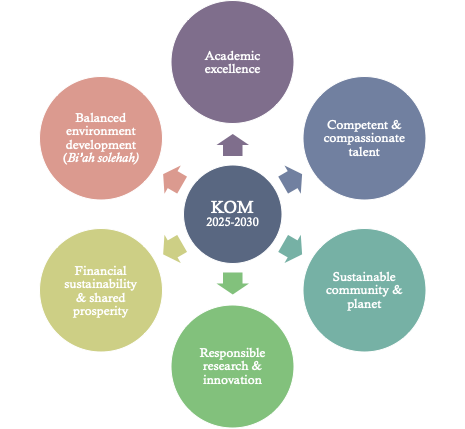
The Kulliyyah of Medicine (KOM) at the International Islamic University Malaysia (IIUM) has developed a transformative strategic framework for 2025–2030. Guided by the Tawhidic worldview, the framework integrates faith (iman), knowledge (‘ilm), and good character (akhlaq) into every aspect of its academic, research, and community engagement efforts. It aims to produce healthcare professionals who embody competence and compassion, recognising their responsibility as khalifah to serve humanity and protect the planet.
In an era defined by post-normal times, characterised by complexity, uncertainty, and chaos, this framework addresses the pressing need for resilience and adaptability in medical education. KOM aims to equip healthcare professionals with the skills, values, and ethical grounding needed to navigate the challenges of a rapidly changing world while upholding their commitment to humanity and the environment.
This framework focuses on six interconnected areas, ensuring a holistic and forward-looking approach to medical education and healthcare development.
Academic Excellence
KOM aims to achieve global recognition as a centre of academic excellence rooted in ethical and spiritual values. Tawhidic principles are embedded into curricula, with a focus on spirituality, clinical competence, and compassion. Continuous quality improvement will ensure the dynamic relevance of these academic programmes.
To enhance clinical training, KOM will adopt cutting-edge technologies such as simulation, virtual reality (VR), and augmented reality (AR). These tools will complement traditional clinical teaching methods, providing learners with immersive environments to refine their skills and prepare for complex and unpredictable healthcare scenarios. Structured workshops for faculty development will further strengthen teaching and assessment skills aligned with faith-based education.
Competent and Compassionate Talent
The framework underscores the importance of nurturing healthcare professionals who excel both technically and ethically. Compassionate care is embedded into academic and clinical assessments, ensuring learners deliver high-quality care while understanding the emotional and spiritual needs of their patients.
A comprehensive human resources and talent management plan is critical to this initiative. This includes planning at the kulliyyah and departmental levels to ensure staffing aligns with workload, preventing burnout and maintaining morale. Training programmes will equip heads of departments and faculty members with essential human resource and leadership skills. Engagement with higher authorities will ensure adequate staffing and resource allocation, supporting both staff motivation and institutional efficiency.
Balanced Environment Development (Bi’ah Solehah)
Creating a bi’ah solehah, or a balanced environment, is central to KOM’s vision. This includes nurturing a harmonious and respectful atmosphere within the KOM community. The practice of spreading salam (greetings of peace) is strongly encouraged, inspired by the hadith of Prophet Muhammad (peace be upon him):
“By Him in Whose Hand is my life! You will not enter Jannah until you believe, and you will not believe until you love one another. Shall I inform you of something which, if you do, you will love one another? Promote greetings (Salam) amongst yourselves.” (Sahih Muslim)
Infrastructure development will align with this vision by creating green-certified buildings and adaptive digital tools that support physical, mental, and spiritual well-being. These efforts ensure KOM remains a leader in fostering an Islamic and ethical environment.
Sustainable Community and Planet
Recognising the interconnectedness of human and planetary well-being, KOM is committed to embedding sustainability into its operations and community engagement. Faculty-led transformation programmes will address pressing social challenges, fostering resilience and health equity in underserved communities.
KOM will enhance its Gender Dysphoria projects, Sejahtera Wellness in Tembeling (SWIT) initiative, and Food Security in Pahang projects, strengthening its engagement with the communities it serves. These initiatives highlight KOM’s commitment to addressing critical health and social issues while promoting sustainability and community well-being. The curriculum will further integrate planetary health topics, equipping learners with the knowledge to tackle global environmental challenges.
Responsible Research and Innovation
KOM places a strong emphasis on producing high-quality research and disseminating knowledge globally. Faculty members are encouraged to contribute their expertise to reputable medical journals, ensuring KOM’s academic excellence is recognised internationally. High-impact research initiatives will address critical healthcare challenges, fostering interdisciplinary collaborations to drive innovation.
Innovation will be further promoted through the registration of intellectual property (IP) and the commercialisation of research outputs. These efforts aim to create tangible societal benefits by translating research outcomes into practical solutions, particularly in sustainable healthcare and planetary health.
Financial Sustainability and Shared Prosperity
KOM is committed to ensuring shared prosperity and financial sustainability to support its learners and community. Currently, KOM awards two scholarships that cover the tuition fees of two deserving learners, demonstrating its commitment to accessible education. Additionally, KOM has established the Tabung Penyayang, a fund dedicated to supporting the financial needs of other learners in the faculty. This initiative reflects the spirit of compassion and mutual assistance central to KOM’s mission.
To enhance financial sustainability, KOM plans to expand its trust fund development activities, aiming to generate RM1 million annually. Financial management training will be provided to departments to optimise resource use and efficiency. Further, KOM will continue to deepen partnerships with underserved communities through health outreach programmes, fostering equity and inclusivity.
A Vision for the Future
The KOM 2025–2030 Strategic Framework is a comprehensive and forward-thinking plan that positions the Kulliyyah as a leader in medical education. By aligning with the Tawhidic worldview, the framework redefines healthcare education to emphasise competence and compassion, while addressing the complexities of post-normal times.
Through its focus on academic excellence, talent development, balanced environment creation, sustainability, research innovation, and financial stability, KOM is well-equipped to meet the demands of the modern world. This framework reflects KOM’s unwavering dedication to the ummah, global society, and the planet, ensuring that its graduates are not only skilled professionals but also ethical leaders committed to serving humanity and fulfilling their divine responsibilities.
The MBBS programme is designed to produce doctors who are competent, compassionate, and safe. This aim extends beyond technical proficiency to cultivate healthcare professionals who are ethically driven, empathetic, and dedicated to the wellbeing of both their patients and society at large. As the world faces increasingly complex health challenges due to environmental crises, these qualities of compassion and competency must also extend to planetary health. Recognising the profound connections between human and environmental health, doctors today must be prepared to understand and address health issues within a broader ecological context.
Moreover, the future of healthcare is uncertain, and doctors will confront unknown and unpredictable challenges. Emerging diseases, environmental degradation, and new public health threats will require healthcare professionals who are adaptable, forward-thinking, and equipped to approach health holistically. Integrating planetary health into the MBBS curriculum aligns with these objectives, preparing future doctors to respond to the interwoven challenges of environmental and human health. Through the framework of Education for Sustainable Development (ESD) and recent updates to the Malaysian Qualifications Framework (MQF), medical educators can seamlessly incorporate planetary health principles without increasing total learning time. This paper outlines how these concepts can be embedded within the existing curriculum, equipping the next generation of doctors to safeguard both human health and environmental sustainability in an unpredictable future.
Understanding Planetary Health, Sustainability, OneHealth, and Nature-Based Solutions
Planetary health, sustainability (specifically, the Sustainable Development Goals or SDGs), OneHealth, and nature-based solutions (NbS) are interconnected yet distinct approaches within environmental and health frameworks. Here’s a comparison:
Focuses on how environmental health affects human wellbeing (Whitmee et al., 2015; Myers & Frumkin, 2020)
Specifically targets interactions between human, animal, and environmental health, particularly zoonotic diseases (Rabinowitz et al., 2018)
Practical actions that protect, sustainably manage, or restore ecosystems to address societal and health challenges (IUCN, 2023)
Primary Goal
To balance current needs with preserving resources and stability for future generations (United Nations, 2015)
To protect human health by safeguarding natural ecosystems and addressing environmental risks (Whitmee et al., 2015)
To address health risks at the intersection of human, animal, and environmental health, especially focusing on zoonoses
To leverage natural systems to enhance resilience and provide ecosystem services that benefit both human and planetary health (IUCN, 2023)
Focus Areas
Resource management, waste reduction, social equity, economic stability, and environmental protection (Raworth, 2017)
Human health impacts from climate change, pollution, and ecosystem degradation (Prescott & Logan, 2019; Myers & Frumkin, 2020)
Zoonotic disease control, ecosystem health, and the interconnectedness of human and animal health (Rabinowitz et al., 2018)
Climate change adaptation, ecosystem restoration, green infrastructure, urban green spaces, and sustainable agriculture (World Economic Forum, 2024)
Applications
Multisectoral approach: energy, agriculture, economics, social policy, etc. (United Nations, 2015)
Primarily within healthcare and public health, with a focus on preventing environmental impacts on human health (Myers & Frumkin, 2020)
Predominantly used in infectious disease control, veterinary science, and environmental health
Used in urban planning, public health, climate resilience, water management, and more (IUCN, 2023; World Economic Forum, 2024)
Relationship to Health
Indirect: Sustainable practices support health by maintaining stable resources and healthy environments (Raworth, 2017)
Direct: Addresses how environmental degradation leads to immediate and long-term health impacts on populations
Direct: Examines the specific health implications of human-animal-environment interactions, focusing on shared diseases
Direct: NbS provide ecosystem services that enhance air and water quality, reduce disease vectors, and promote mental and physical wellbeing (IUCN, 2023)
Scope Comparison
Broader scope, incorporating planetary health as a subset (United Nations, 2015)
More focused within sustainability, specifically relating to environmental impacts on health (Whitmee et al., 2015)
Narrowest scope, focusing specifically on health issues arising from human-animal-environment interactions (Rabinowitz et al., 2018)
Targeted approach within planetary health, using ecosystems to deliver sustainable health and environmental outcomes (World Economic Forum, 2024)
This table clarifies that sustainability is the broadest framework, with planetary health focusing on environmental impacts on human wellbeing. OneHealth and NbS are more specific, with NbS providing actionable solutions that align with both planetary and human health.
The Role of Nature-Based Solutions in Planetary Health and Medical Education
Nature-based solutions, supported by frameworks like those from the International Union for Conservation of Nature (IUCN), are integral to planetary health, providing ecosystem services that benefit human wellbeing. Examples include the role of green urban spaces in reducing respiratory diseases, wetlands in water purification, and mangroves in coastal resilience. Pharmaceutical companies are also beginning to invest in NbS, recognising their importance in sourcing medicinal compounds sustainably and supporting biodiversity that mitigates disease spread (World Economic Forum, 2024).
By incorporating NbS concepts into medical education, future healthcare professionals can better understand how ecosystem health directly impacts human health. This approach allows doctors to recommend preventive strategies that support both individual and community health, aligning with planetary health goals.
Seamless Integration of Planetary Health and NbS in Medical Education
Nature-based solutions can be seamlessly integrated into MBBS modules. Here’s a structure for how these topics align with existing curriculum goals:
1. Physiology and Pathology
• Embed environmental factors, such as pollution and climate change, in discussions of respiratory and cardiovascular health.
• Include studies on nanoplastic exposure and its potential inflammatory effects in cardiovascular health modules (Jin et al., 2022).
• Integrate the effects of urban green spaces on lowering rates of respiratory diseases due to reduced pollution and increased physical activity.
2. Community Medicine and Public Health
• Teach how NbS can mitigate vector-borne diseases, such as dengue and malaria, by restoring wetlands and promoting urban green spaces.
• Discuss the importance of sustainable food systems within nutrition topics, linking agroforestry practices with improved nutrition and reduced pesticide use (World Economic Forum, 2024).
• Explore mental health benefits of nature exposure, using urban green space initiatives as a case study.
3. Pharmacology
• Examine sustainable medicinal sourcing and the role of biodiversity in providing plant-based medicines. Pharmaceutical companies’ investments in biodiversity protection reflect this approach (World Economic Forum, 2024).
• Discuss antibiotic stewardship to prevent environmental contamination and antimicrobial resistance (Singer et al., 2019).
4. Clinical Rotations
• Include case studies that address health impacts of environmental changes, such as heat-related illnesses and waterborne diseases from pollution and ecosystem degradation.
• Emphasize NbS as community-level solutions in clinical practice, such as recommending exposure to green spaces for stress management and discussing community advocacy for clean water and air.
Expected Outcomes of Integrating Planetary Health and NbS
Aligned with the updated MQF and ESD principles, the following are the expected outcomes for medical graduates 4-5 years after completing a curriculum that integrates planetary health and NbS:
1. Holistic Patient Care with Planetary Health Awareness
Graduates will deliver patient care that considers environmental factors affecting health, advising patients on lifestyle choices that support both personal and planetary wellbeing.
2. Advocacy for Sustainable Healthcare
Graduates will promote sustainable practices in healthcare settings, such as reducing waste, supporting biodiversity, and conserving energy, contributing to planetary health goals.
3. Community Engagement and Environmental Health Advocacy
Graduates will educate communities on the benefits of NbS, advocating for policies that promote health through clean air, water, and urban greenery.
4. Ethical Responsibility in Environmental Health
Graduates will understand their role in promoting ecosystem protection as a foundation for health, supporting efforts to reduce health disparities related to environmental degradation.
Recommendations
Integrating planetary health and NbS into the MBBS curriculum, without adding new topics, enriches medical education by promoting a global awareness of health interdependencies. This integration equips doctors to address health in ways that support human and environmental sustainability, making a positive impact on society and the planet.
Disclaimer
This article was created with assistance from ChatGPT, an AI language model, to provide an overview of integrating planetary health into medical education. While the content has been reviewed to ensure accuracy and relevance, readers are encouraged to consult additional sources and expert opinions when implementing educational frameworks.
References
International Union for Conservation of Nature. (2023). Nature-based solutions. Retrieved from https://iucn.org/our-work/nature-based-solutions
Jin, H., Ma, T., Sha, X., Liu, Z., & Zhou, Y. (2022). Nanoplastics and cardiovascular diseases: A link from the environment to human health. Environmental Research, 204, 112281. https://doi.org/10.1016/j.envres.2021.112281
Landrigan, P. J., Fuller, R., Acosta, N. J. R., Adeyi, O., Arnold, R., Basu, N., & Zhong, M. (2018). The Lancet Commission on pollution and health. The Lancet Planetary Health, 2(1), e26-e36. https://doi.org/10.1016/S2542-5196(17)30173-8
Lim, S. S., Vos, T., Flaxman, A. D., Danaei, G., Shibuya, K., Adair-Rohani, H., & Ezzati, M. (2021). A comparative risk assessment of burden of disease and injury attributable to 67 risk factors and risk factor clusters in 21 regions, 1990–2010: A systematic analysis for the Global Burden of Disease Study 2010. The Lancet, 380(9859), 2224-2260. https://doi.org/10.1016/S0140-6736(12)61766-8
Myers, S. S., & Frumkin, H. (2020). Planetary health: Protecting nature to protect ourselves. Island Press.
Prescott, S. L., & Logan, A. C. (2019). Planetary health: From the wellspring of holistic medicine to personal and public health imperative. Explore, 15(2), 98-106. https://doi.org/10.1016/j.explore.2018.11.008
Prüst, M., Meijer, J., Westerink, R. H., & Brouwer, A. (2020). The plastic brain: Neurotoxicity of micro- and nanoplastics. Environmental Science & Technology, 54(18), 11431-11441. https://doi.org/10.1021/acs.est.0c02350
Rabinowitz, P. M., Natterson-Horowitz, B., Kahn, L. H., & Kock, R. (2018). One Health and Planetary Health: Perspectives from the U.S. National Institutes of Health. National Institutes of Health.
Raworth, K. (2017). Doughnut economics: Seven ways to think like a 21st-century economist. Chelsea Green Publishing.
Singer, A. C., Shaw, H., Rhodes, V., & Hart, A. (2019). Review of antimicrobial resistance in the environment and its relevance to environmental management in the context of planetary health. The Lancet Planetary Health, 3(7), e253-e261. https://doi.org/10.1016/S2542-5196(19)30078-1
United Nations. (2015). Transforming our world: The 2030 Agenda for Sustainable Development. Sustainable Development Goals (SDGs). Retrieved from https://sdgs.un.org/2030agenda
Whitmee, S., Haines, A., Beyrer, C., Boltz, F., Capon, A. G., Dias, B. F., & Yach, D. (2015). Safeguarding human health in the Anthropocene epoch: Report of The Rockefeller Foundation–Lancet Commission on planetary health. The Lancet, 386(10007), 1973-2028. https://doi.org/10.1016/S0140-6736(15)60901-1
World Economic Forum. (2024). How pharma companies are investing in nature to improve human and planetary health. Retrieved from https://www.weforum.org/stories/2024/09/how-pharma-companies-are-investing-in-nature-to-improve-human-and-planetary-health/