As someone who works in education, I often think about how AI is changing the way we learn and teach. Artificial intelligence has become part of our daily routine, from helping us write to generating art or analysing data. It makes things faster and more convenient, but I sometimes wonder if it also makes us forget what being human really means. Professor Osman Bakar, in his recent essay Artificial Intelligence and the Future of Creative Thinking: A Reflection from Islamic Perspective (2025), raises the same concern. He reminds us that the question is not how powerful AI can become, but how wisely we decide to use it.
He writes that AI, like all forms of knowledge, carries both benefit and harm. It can stimulate creativity and make learning more accessible, but it can also weaken our capacity for deep thought, especially when we let machines do the thinking for us. He shares Sweden’s experience of moving education from printed textbooks to digital tools, which coincided with a decline in reading comprehension and overall student well-being. The lesson is clear: technology is useful, but it is not neutral. It shapes how we think and who we become.
In Islam, knowledge is also never neutral. The Prophet Muhammad (peace be upon him) taught us to seek ‘ilm naf‘, or beneficial knowledge, and to seek refuge from unbeneficial knowledge. This means that knowledge becomes valuable only when it improves the human being, both morally and spiritually. Professor Osman argues that AI should be guided by this same principle. It must help us grow in wisdom and compassion, not just in productivity or speed.
He also reminds us to keep AI in its proper place. The machine can process information, but it cannot determine what is good or right. Only humans, guided by intellect (‘aql) and spirit (ruh), can make that judgment. AI should therefore assist us in developing creativity and critical thinking, not replace them. If we rely too heavily on technology to think for us, we risk losing our sense of purpose and accountability.
Another point he makes is about balance. While digital tools can enrich education, they should not completely replace traditional and physical forms of learning. Reading a printed book, having a real conversation, or reflecting quietly on what we have learned are still vital experiences that shape our character. Over-digitalisation may make learning more efficient, but it can also make it shallow. Without space for empathy, humility, and reflection, education loses its human soul.
The heart of Professor Osman’s idea is the unity between intellect and spirituality. True creativity, he says, happens when the mind and the soul work together. Thinking without spirituality becomes cold and mechanical. Spirituality without thinking can become blind and directionless. When both are integrated, creativity becomes meaningful, ethical, and transformative. In that sense, AI can be a tool that helps us think better, as long as we use it with moral awareness and spiritual grounding.
For Muslim educators, researchers, and students, this has real implications. We need to design AI applications that serve higher goals. AI should help us address issues that truly matter, such as improving public health, promoting justice, caring for the environment, and nurturing compassion. It should not exist simply to make us faster or wealthier. Ethical principles drawn from maqasid al-shariah (the objectives of Islamic law) should guide how we create and use technology, ensuring it protects life, intellect, faith, lineage, and property.
At the end of his essay, Professor Osman quotes a hadith stating that the world will not end until no one remembers God. It is a profound reminder that remembrance of the Divine is the foundation of human existence. Without that remembrance, all our progress loses meaning. In the same way, if AI advances but humanity forgets its spiritual purpose, we will end up with brilliant machines and empty hearts.
Perhaps the real question for our time is not how intelligent AI can become, but how wise we can remain while using it. Technology will continue to evolve, but our task is to ensure it serves what is good, just, and beneficial. As Professor Osman beautifully reminds us, knowledge must be both true and good. AI, too, must follow that path.
So, as generative tools like ChatGPT become part of our daily thinking and writing, how can we really adapt them to nurture not only intelligence but also conscience and compassion?
Reference
Bakar, O. (2025). Artificial intelligence and the future of creative thinking: A reflection from Islamic perspective. In The Muslim 500, 2025 Edition. The Royal Islamic Strategic Studies Centre. https://themuslim500.com/2025-edition/guest-contributions-2025/artificial-intelligence-and-the-future-of-creative-thinking-a-reflection-from-islamic-perspective/
We live in the Anthropocene, an era defined by human impact on the planet. From greenhouse gases altering the climate to plastics filling our oceans, the footprint of humankind is everywhere. While this age is often spoken of with despair, Islam offers a way of looking at the world that can transform how we live in it.
The Islamic lens shifts our gaze. Planetary health is not only about survival or managing resources. It is about recognising the Creator, honouring the trust He has placed on us, and living responsibly in balance with the rest of creation.
Consumption and moderation
The Anthropocene is marked by overconsumption: fast fashion, fast food, endless energy demands. Islam teaches the opposite: eat and drink, but waste not by excess (Qur’an 7:31). Imagine if Muslims, who number nearly two billion, practiced this daily. Wasting less food, eating simply, and valuing halal and tayyib (wholesome) consumption would reduce emissions from food production, cut landfill waste, and preserve resources. A prophetic tradition teaches us to use water sparingly even while standing by a flowing river. In the Anthropocene, where water stress affects billions, such guidance is transformative.
Balance in land and resources
Deforestation, soil degradation, and loss of biodiversity define the Anthropocene. The Qur’an describes creation as set in mīzān (balance) and warns not to disrupt it. Classical Islamic societies applied this through hima (protected zones) where grazing and logging were restricted to preserve ecosystems. Reviving this ethic today could mean Muslims leading in protecting forests, restoring landscapes, and creating green sanctuaries in cities. Restoring balance is not only ecological work but also a fulfilment of our role as khulafā’ (trustees).
Energy and responsibility
The burning of fossil fuels drives much of the Anthropocene’s crisis. While large systems are slow to change, Islamic ethics can shape individual and community responsibility. A mosque that runs on solar power, an institution that reduces energy waste, or families that choose public transport over private cars are all examples of acts of worship. When energy use is guided by the principle of amānah (trust), conservation becomes an expression of faith.
Waste and plastics
Plastic is a defining pollutant of our age, choking rivers and oceans. Islam directly prohibits wastefulness. The Prophet ﷺ taught that even a small crumb of bread should not be discarded. This mindset, if truly lived, means resisting the throwaway culture of the Anthropocene. Carrying reusable containers, supporting circular economies, and avoiding single-use plastics become not only environmental actions but also spiritual duties.
Justice across generations
The Anthropocene has created deep inequities. The poorest often suffer most from climate change while contributing least to its causes. Islam’s principle of justice (ʿadl) and doing good (iḥsān) requires that we think of others, including future generations. Cutting waste, living simply, and advocating for fair policies are ways Muslims can enact intergenerational justice. The Prophet ﷺ said: “If the Final Hour comes while you have a seedling in your hand, plant it.” This teaching encourages us to act responsibly today even if we may not see the results.
A different Anthropocene
If Muslims were to live fully by these principles of moderation, balance, justice, and responsibility, the Anthropocene would look very different. Instead of being an age defined by human exploitation, it could become an age defined by human stewardship.
Planetary health through an Islamic lens is not only about protecting ecosystems but also about aligning our daily lives with the recognition of Allah. In doing so, we rediscover balance, reduce waste, live responsibly, and honour the trust of creation. That is how Islam, if practiced with consciousness, can truly change the world.
Speech to the MBBS Graduates of the Kulliyyah of Medicine, IIUM 2025
My dear graduates,
Today is a moment of deep significance — not just for you and your families, but for all of us at the Kulliyyah of Medicine. We come together to celebrate your journey, your sacrifices, and your growth. But more than that, we celebrate the beginning of your noble path ahead as doctors who will serve not just with skill, but with soul.
At IIUM, we have always aspired to produce more than just competent doctors. We have aspired to nurture healers. Healers who see their work as an act of worship. Healers who recognise that every breath of a patient, every touch of healing, every word of comfort — is part of their ibadah. This is what we mean when we say: medicine with a soul.
In our Kulliyyah, we uphold a Tawhidic epistemology — a worldview where all knowledge comes from Allah and must lead back to Him. Tawhid is not only the foundation of our faith; it is the foundation of how we teach, how we learn, and how we serve. And so, when you step into the hospital or the clinic, you do so not only as a professional, but as someone who carries the weight of trust — a trust from Allah, a trust from the ummah.
You are graduating into a world that is in need of people who are not only skilled, but principled. Not only precise, but compassionate. Not only efficient, but ethical. That is why we remind you — competence, compassion, and conscience must always go together. They are not three separate paths. They are one.
Competence is the foundation. It is your clinical judgment, your scientific knowledge, your professional performance. It is the standard we all expect of you. It is what allows your patients to trust you. But competence alone is not enough.
Compassion is the heartbeat of medicine. Without it, even the best treatment feels cold. With it, even simple care can become transformative. And yet, compassion will be tested. There will be moments when you feel exhausted, discouraged, or detached. That is when you must renew it — by returning to Allah, by recalling your niyyah, by reminding yourself that you are here to serve.
Conscience is your internal compass. It is the integrity you uphold when no one is watching. It is your fear of Allah and your love for the truth. It will protect you when systems fail you. It will anchor you when everything else becomes uncertain.
You chose this path because you felt a calling. A desire to help. A desire to heal. That desire must always be kept alive, not for applause or accolades, but because you see this profession as part of your faith. That is what makes your work sacred. Every diagnosis you make, every decision you take, is an act of responsibility and submission.
The world will not always be kind. The job will not always be easy. There will be pressure, bureaucracy, burnout. And yet, I want you to remember — compassion is not finite. It can be replenished. Through prayer. Through rest. Through reflection. When you feel tired, do not only rest your body. Rest your heart in the remembrance of Allah.
Remember also that you are not alone. You are part of a family — this Kulliyyah, this university, this ummah. Reach out when you need help. Lean on your peers. Stay close to your mentors. Keep learning. Keep growing.
Your graduation is not an end. It is the beginning of a lifelong commitment to serve, to uplift, and to bring healing. You are now ambassadors of the Kulliyyah of Medicine and the spirit of IIUM. You carry with you a sacred trust — to practise medicine with a soul.
May Allah SWT bless you, protect your sincerity, and make your hands a means of healing, your tongue a source of comfort, and your heart a light for those in darkness. May He guide you with wisdom, strengthen you with patience, and reward your service with barakah in both worlds.
Congratulations, my dear doctors. May your journey be one of competence, compassion, and conscience.
The modern university, especially in the fields of science and medicine, often functions within a paradigm that disconnects knowledge from values, science from ethics, and intellect from faith. This fragmented epistemology, rooted in secular modernity, results in professionals who are technically proficient but morally and spiritually unmoored. In the Muslim world, this disjunction has precipitated a crisis of meaning in education.
The International Islamic University Malaysia (IIUM), since its inception, has sought to address this crisis through the vision of Islamisation of Human Knowledge (IoHK). First conceptualised by Syed Muhammad Naquib al-Attas and institutionalised by IIUM’s early leadership, especially the late Tan Sri Professor Dr. Mohammad Kamal Hassan, the founding Rector, IoHK proposes that all branches of knowledge must be critically assessed, purified, and realigned with Islamic values, ethics, and metaphysical worldview.
This foundational vision has evolved. Under the guidance of Professor Emeritus Datuk Dr. Osman Bakar, the current Rector of IIUM, the process of Islamisation is being deepened through the framework of Tawhidic Epistemology (TE). TE serves not only as a tool for knowledge reform but also as a worldview that re-centres all human inquiry on tawhid, the oneness of Allah.
In the Kulliyyah of Medicine (KOM), this renewed vision is operationalised through seven TE principles, which guide the holistic development of future Muslim doctors, competent in skill, rich in character, and conscious of divine accountability.
Tawhidic Epistemology – Rebuilding the Unity of Knowledge
Tawhidic Epistemology asserts that all knowledge, whether revealed (naqli) or acquired through reason (aqli), emanates from a single divine source. It rejects the artificial division between “religious” and “secular” knowledge and calls instead for a unified understanding of reality, rooted in tawhid.
TE addresses the intellectual fragmentation of modern education by emphasising:
The unity of truth under the oneness of Allah
The integration of scientific inquiry with spiritual ethics
A holistic view of the human being as a physical, moral, intellectual, and spiritual entity
This philosophy underpins the contemporary direction of IIUM. Rector Osman Bakar’s notion of the Tawhidic Mind, Ummatic Mind, and Ummatic Excellence encapsulates a developmental framework in which students are nurtured to become not only learned individuals but ethical leaders and khalifahs of Allah.
Seven Principles of Tawhidic Epistemology in Medical Education
1. Unify Divine Knowledge
Students are taught that the Qur’an, Prophetic traditions, and empirical knowledge are not in conflict but are harmonious components of a unified truth.
Example 1: In organ transplantation modules, students learn both the medical criteria and the ethical rulings from Islamic jurisprudence, fostering an integrated approach to decision-making.
Example 2: In anaesthesiology, students examine the issue of euthanasia by exploring both biomedical perspectives, such as the management of end-of-life pain and palliative sedation and Islamic ethical positions, which uphold the sanctity of life and prohibit any form of deliberate life-ending interventions. This integrative teaching helps students distinguish between relieving suffering and violating divine principles regarding life and death.
2. Uphold Ethical Trust
Knowledge is an amanah, a trust from Allah. This principle instils sincerity, fairness, and accountability as part of the student’s ethical compass.
Example 1: Research ethics and professional conduct are framed as spiritual obligations, not merely institutional requirements. Students are taught that informed consent, avoiding plagiarism, and honest data reporting are forms of worship when done with integrity and consciousness of divine accountability.
Example 2: In clinical practice, maintaining patient privacy and dignity is emphasised as both a professional and spiritual duty. For example, when examining patients of the opposite gender, students are trained to use a chaperone, lower their gaze, and seek consent respectfully, upholding Islamic adab (etiquette) while fulfilling clinical responsibilities.
3. Pursue Higher Purpose
Through the Ummatic Mind, students are aligned with the maqasid al-shariah (higher objectives of Islamic law), such as the preservation of life, intellect, and faith. Medical education is framed not merely as skill acquisition, but as a sacred journey that integrates clinical excellence with spiritual awareness.
Example 1: The intention behind treating patients is not only to preserve life and advance knowledge in medicine, but also to serve as a means of drawing both the caregiver and the patient closer to Allah. This transforms everyday clinical tasks into acts of worship and service to humanity.
Example 2: In palliative care training, students are taught to go beyond symptom control by addressing the emotional, psychological, and spiritual dimensions of dying. Upholding dignity at the end of life becomes an act of compassion and a reflection of the Islamic value of mercy (rahmah).
4. Contribute Meaningful Impact
Knowledge must serve the ummah and uplift the marginalised. Learning is not solely for personal success, but for advancing social justice, improving equity, and fulfilling the duty of khilafah (stewardship) on Earth.
Example: During the community medicine posting, students engage in health outreach activities in underserved and remote areas. These efforts, which include screening programmes, health education, and preventive care, go beyond academic fulfilment. They are expressions of the Islamic imperative to use knowledge in the service of others, especially the vulnerable and neglected.
5. Develop Professional Mastery
Professional mastery in medicine demands the structured attainment of competencies, not only in clinical knowledge and technical skills but also in communication, decision-making, and professionalism. Within the Tawhidic framework, competence is pursued as an obligation (fard) and a form of amanah (trust), to ensure safe, effective, and ethical care.
Example: The curriculum is designed to ensure students achieve clearly defined learning outcomes and clinical competencies, including history-taking, examination, procedural skills, and clinical judgement. These are continuously assessed through workplace-based methods and objective clinical examinations, ensuring graduates are both capable and accountable in fulfilling their professional responsibilities.
6. Embody Compassionate Care
Inspired by the divine attribute of rahmah (mercy), compassion in medical practice is seen as a form of renewed empathy that is conscious, purposeful, and ethically grounded. It involves a sincere commitment to alleviate suffering, preserve human dignity, and foster meaningful human connections.
Example: Communication training emphasises emotional intelligence and empathy, especially in situations such as delivering difficult news or managing patients with chronic and terminal illnesses. Students are taught to listen attentively, respond sincerely, and maintain a respectful presence. This compassionate approach extends beyond patients, fostering kindness and mutual respect in interactions with colleagues, healthcare staff, and the wider medical team.
7. Practice Moral Integrity
Spiritual growth must be accompanied by a strong moral compass that guides both personal and professional conduct. This principle draws upon the concepts of ihsan (excellence in worship and character) and tazkiyah (purification of the soul), nurturing sincerity, truthfulness, and ethical discipline in all aspects of life.
Example: Students are taught that integrity applies to every action, from being honest in assignments and examinations to being truthful in logbooks and research reports. For staff, this extends to making accurate claims and fulfilling responsibilities with trust and fairness. Upholding Islamic adab includes maintaining respectful and appropriate interactions across genders, observing Shariah-compliant boundaries in communication and behaviour. Moral integrity is nurtured not only for personal salvation but also to uphold public trust and professionalism in medicine.
Islamisation of Knowledge – Reforming the Content
While TE provides the worldview, Islamisation of Knowledge remains the methodological backbone of IIUM’s academic reform. It aims to critique, filter, and reconstruct modern knowledge according to Islamic ethical and ontological principles.
At KOM, this includes:
Evaluating medical knowledge through the lens of Shariah and ethics
Reintroducing Islamic concepts into contemporary discourse on health
Creating new integrative models of care based on the Islamic view of the human being
Examples:
Mental health modules include nafs, qalb, and fitrah alongside DSM-based diagnosis.
Public health courses incorporate maqasid-oriented strategies.
Students conduct research exploring the intersection of Islamic ethics and epidemiology.
Tawhidisation and Islamisation – Complementary Approaches
Aspect
Tawhidic Epistemology
Islamisation of Knowledge
Nature
Foundational worldview based on tawhid
Methodological process for content reform
Focus
How knowledge is sourced, internalised, and valued
How knowledge is critiqued, refined, and applied
Function
Shapes the learner’s consciousness and ethical disposition
Shapes the curriculum and scholarly output
Application
Seven TE principles guide the values and learning culture
Islamised content in clinical, behavioural, and social sciences
Conclusion
The journey of IIUM, from its Islamisation of knowledge focus to its expansion into Tawhidic Epistemology, reflects a continuous pursuit of holistic and purposeful education. These are not competing philosophies, but rather stages in the development of an Islamic intellectual tradition that seeks to integrate revelation, reason, and reality.
In medical education, this integration results in a curriculum that goes beyond technical training. At KOM, Tawhidic Epistemology influences the mindset. Islamisation of Knowledge reforms the curriculum content. Together, they guide the formation of doctors who are technically skilled, spiritually aware, and socially responsible.
This represents a medicine with a soul. It signifies a return to the Islamic civilisation’s tradition of learning that heals both the body and the spirit, and a renewal of education as a sacred trust to be fulfilled in the service of Allah and humanity.
References
Al-Attas, S. M. N. (1978). Islam and secularism. Muslim Youth Movement of Malaysia.
Bakar, O. (2022). Tawhid and science: Islamic perspectives on religion and science. Penerbit UTM Press.
Hassan, M. K. (1981). A return to the Qur’anic paradigm of development and its implications for education policy and the curriculum. International Institute of Islamic Thought and Civilization.
Nasr, S. H. (1968). Science and civilization in Islam. Harvard University Press.
Rahman, F. (1982). Islam and modernity: Transformation of an intellectual tradition. University of Chicago Press.
In the Islamic worldview, knowledge is not categorised into ‘Islamic’ and ‘secular.’ There is only one knowledge — al-‘ilm — bestowed by Allah, whether discovered through divine revelation (wahy) or human reason (‘aql). All beneficial knowledge should ultimately draw us closer to Allah, the All-Knowing. This article explores the field of epidemiology and biostatistics through this lens of divine unity, affirming that scientific inquiry and statistical reasoning are not merely technical disciplines, but pathways to understanding the patterns and wisdom embedded in Allah’s creation.
John M. Last (1988) defined epidemiology as “the study of the distribution and determinants of health-related states or events in specified populations, and the application of this study to the control of health problems.” This definition highlights three core components: distribution, determinants, and application. Distribution refers to patterns — who is affected, where, and when. Determinants delve into the causes, risk factors, and protective factors. Application demands action — the use of findings to prevent and control diseases.
In Islam, observation of patterns in nature and society is encouraged. The Qur’an repeatedly invites reflection (tadabbur) on signs (ayat) in the universe and within ourselves. Understanding patterns of disease aligns with this call to contemplation and action. Epidemiology, therefore, becomes a means of fulfilling the Islamic obligation to protect life (hifz al-nafs), one of the five higher objectives of Shariah (maqasid al-shariah).
Sir Austin Bradford Hill (1965) introduced a set of principles to guide causal inference in epidemiology. His criteria — strength, consistency, temporality, biological gradient, plausibility, coherence, experiment, specificity, and analogy — serve as guides rather than strict rules.
Yet, we must recognise the epistemological humility within our methods. In regression models, confidence intervals, and Hill’s criteria, there is always an element of uncertainty. This aligns with the Islamic view that human knowledge is inherently limited. As Allah reminds us: “And you (O mankind) have not been given of knowledge except a little.” (Qur’an, Al-Isra’, 17:85)
Hence, we strive to understand cause and effect through careful observation and reasoning, but ultimately, we acknowledge that true causality is known only to Allah. Our frameworks are approximations — tools to aid, not final truths.
Historical accounts during the time of the Prophet Muhammad ﷺ and his companions demonstrate the application of outbreak control principles. One notable example is the plague (ṭā‘ūn) during the rule of Caliph Umar ibn al-Khattab. When the plague broke out in Syria, Umar decided not to enter the area, and advised others not to leave or enter — an early form of quarantine.
The Prophet ﷺ said: “If you hear of a plague in a land, do not enter it; and if it breaks out in a land where you are, do not leave it.” (Sahih al-Bukhari, Hadith 5728; Sahih Muslim, Hadith 2219)
This hadith reflects core outbreak control principles such as isolation, movement restriction, and collective responsibility — key strategies in modern epidemiology.
Islam strongly advocates prevention. The Prophet ﷺ advised moderation in eating: “The son of Adam does not fill any vessel worse than his stomach. It is sufficient for the son of Adam to eat a few mouthfuls to keep him going. If he must do that (fill his stomach), then let him fill one-third with food, one-third with drink, and one-third with air.” (Sunan Ibn Majah, Hadith 3349)
This guidance is preventive in nature and closely aligns with public health nutrition. Islam connects overindulgence and lack of restraint to the whispers of Shayṭān. Preventive health, therefore, is not just a matter of science, but a matter of spiritual discipline.
Islamic rituals incorporate hygiene into acts of worship. Ablution (wudu’), performed five times daily before prayer, involves washing the hands, mouth, nose, face, arms, head, and feet — the very areas associated with microbial transmission.
The Prophet ﷺ also instructed: “Cover your utensils and tie your water skins, for there is a night in the year when plague descends, and it does not pass an uncovered utensil or untied water skin without some of that plague descending into it.” (Sahih Muslim, Hadith 2014)
These teachings reflect divine wisdom in infection prevention, centuries before the discovery of microbes and germ theory.
Biostatistics provides us with essential tools to summarise data and draw meaningful inferences about populations from sample observations. Among its most powerful techniques is regression analysis, which allows us to explore and quantify the relationship between an outcome (dependent variable) and one or more explanatory (independent) variables.
The general form of a multiple linear regression model is:
y = β₀ + β₁x₁ + β₂x₂ + … + βₖxₖ + ε
In this equation:
y represents the outcome or response variable we aim to predict or explain,
x₁ to xₖ are the predictor variables that we believe influence the outcome,
β₀ is the intercept, the expected value of y when all predictors are zero,
β₁ to βₖ are the regression coefficients that quantify the effect of each predictor on the outcome, and
ε is the error term, capturing the variability in y that the model cannot explain.
This error term is more than just a technical component; it is a profound acknowledgment of the limits of human understanding. Even with the most refined models and abundant data, there will always be elements of unpredictability — due to omitted variables, imprecise measurements, biological variation, or other unknown factors. The presence of this uncertainty is a built-in reminder that our knowledge is partial and conditional.
From an Islamic perspective, this aligns beautifully with the concept of epistemic humility. As Allah states in the Qur’an: “And you (O mankind) have not been given of knowledge except a little.” (Qur’an, Al-Isra’, 17:85)
Thus, while biostatistics helps us make informed decisions and uncover meaningful relationships, it also teaches us to recognise the boundaries of what we can know. The error term symbolises the divine reality — that ultimate knowledge lies only with Allah. It invites us to pursue knowledge responsibly, with sincerity, but never with arrogance.
This concept is further reinforced in the Qur’an: “And above every possessor of knowledge is one [more] knowing.” (Qur’an, Yusuf, 12:76)
Every estimate, statistical model, and inference must be grounded in this awareness. We can model, measure, and approximate, but only Allah knows the unseen, the future, and the full complexity of creation. Biostatistics, therefore, is not only a scientific tool but also a spiritual exercise in recognising our role as seekers of knowledge, always dependent on the One who knows all.
Epidemiology and biostatistics, when viewed through the Islamic perspective of tawḥīd (oneness of Allah), are not detached from faith but are deeply connected to it. These sciences offer not just understanding but also tools to protect life, serve society, and fulfil the trust placed upon us as khalifah (stewards) on Earth. By unifying rational inquiry with spiritual awareness, we find that knowledge — whether derived from revelation or observation — is ultimately from the same source. Through this lens, our pursuit of health knowledge becomes a journey toward Allah.
References
1. Last, J. M. (1988). A Dictionary of Epidemiology (2nd ed.). Oxford University Press.
2. Hill, A. B. (1965). The Environment and Disease: Association or Causation? Proceedings of the Royal Society of Medicine, 58(5), 295–300.
3. The Noble Qur’an, Surah Al-Isra’ (17:85), Surah Yusuf (12:76).
4. Sahih al-Bukhari, Book 76, Hadith 5728.
5. Sahih Muslim, Book 39, Hadith 2219; Book 23, Hadith 2014.
6. Sunan Ibn Majah, Book 29, Hadith 3349.
7. Al-Ghazali, I. H. Ihya Ulum al-Din – On the virtues of knowledge and its relation to action and worship.
8. Nasr, S. H. (1992). Science and Civilization in Islam. Harvard University Press.
The proposed Tawhidic Epistemology (TE) framework provides a holistic and integrated approach to education, ensuring that knowledge acquisition, application, and dissemination align with Islamic values, ethics, and social responsibility. Rooted in the concept of Tawhid (Divine Unity), TE emphasises the harmonisation of revealed (naqli) and rational (aqli) knowledge, fostering an educational system that not only produces competent professionals but also ethical and spiritually conscious individuals.
Key Principles of Tawhidic Epistemology
1. Unity of knowledge (wahdatul ‘ilm)
TE views knowledge as a single, unified entity, rejecting the artificial division between religious and secular sciences. The integration of Islamic ethics with modern scientific advancements ensures that education produces professionals who are both technically competent and morally guided.
2. Knowledge as a trust (amanah)
Education is an ethical responsibility (amanah) that must be pursued and applied with integrity. Both educators and students must uphold honesty, fairness, and accountability in the acquisition and dissemination of knowledge.
3. Purpose-driven learning (maqasid al-shariah)
Education should align with the higher objectives of Islamic law (maqasid al-shariah), ensuring that knowledge serves the protection of faith, life, intellect, lineage, and wealth. This principle ensures that education contributes to individual and societal well-being.
4. Critical thinking with ethics (ijtihad & adab)
Students must develop the ability to think critically, analyse data, and make informed decisions while maintaining ethical boundaries and intellectual humility. TE encourages inquiry and reasoning (ijtihad) but insists that it is guided by respect, discipline, and Islamic etiquette (adab).
5. Compassionate education (rahmatan lil ‘alamin)
TE emphasises the role of compassion (rahmah) in learning and practice, encouraging educators to act as mentors (murabbi) who guide students in developing both technical skills and strong moral character.
6. Application of knowledge for social good (ilm nafi’)
The purpose of knowledge is to benefit humanity, addressing real-world challenges while ensuring ethical responsibility. Research, innovation, and education should contribute to societal development and well-being.
7. Continuous improvement (tazkiyah & ihsan)
TE promotes lifelong learning, self-improvement (tazkiyah), and the pursuit of excellence (ihsan) in education and professional practice. This principle ensures that students and educators engage in continual self-reflection and strive for ongoing growth.
Implementation in IIUM MBBS
TE Principle
Objective Outcome
Expected Outcome
Example in MBBS
Unity of Knowledge (Wahdatul ‘Ilm)
Integrate Islamic and scientific knowledge into all academic disciplines.
A holistic, interdisciplinary curriculum where students apply both revealed and rational knowledge in problem-solving.
Teaching medical ethics by integrating Islamic bioethics with contemporary medical practices (e.g., end-of-life care, organ donation).
Knowledge as a Trust (Amanah)
Instill responsibility and ethical awareness in students and faculty.
Graduates and faculty uphold academic integrity, honesty, and social responsibility in education and research.
Emphasising the duty of care in medical practice, ensuring honesty in patient management and research integrity.
Purpose-Driven Learning (Maqasid al-Shariah)
Align teaching, research, and policies with the higher objectives of Islamic law (maqasid al-shariah).
Education fosters moral character, social justice, and professional ethics, contributing to the well-being of society.
Ensuring that clinical decisions consider the protection of life (hifz al-nafs) and intellect (hifz al-aql), e.g., balancing patient autonomy with Islamic ethical considerations.
Critical Thinking with Ethics (Ijtihad & Adab)
Encourage analytical reasoning while upholding ethical conduct.
Students and faculty engage in critical thinking and innovation while maintaining humility, respect, and ethical considerations.
Teaching evidence-based medicine while ensuring students approach medical uncertainties with humility and respect for diverse perspectives.
Compassionate Education (Rahmatan lil ‘Alamin)
Foster a culture of compassion and ethical leadership in education.
Graduates develop strong interpersonal and professional ethics, ensuring human-centred, compassionate decision-making.
Embedding compassionate patient care in clinical training, focusing on bedside manner, empathy, and ethical communication.
Application of Knowledge for Social Good (Ilm Nafi’)
Promote research, teaching, and innovation that serve the needs of society.
Education produces graduates who actively contribute to solving real-world challenges with ethical and sustainable solutions.
Encouraging community-based research on health disparities and disease prevention in underserved populations.
Continuous Improvement (Tazkiyah & Ihsan)
Encourage lifelong learning, self-improvement, and striving for excellence.
Students and faculty cultivate a mindset of ongoing growth, self-reflection, and commitment to continuous excellence in learning and service.
Incorporating reflective practice in medical training, encouraging students to assess their own performance and continuously seek improvement.
Conclusion
The Tawhidic Epistemology framework provides a structured approach to education that balances academic excellence with ethical and spiritual growth. By integrating Islamic principles with modern scientific disciplines, TE produces graduates who are not only skilled professionals but also compassionate, ethical, and socially responsible leaders.
At the International Islamic University Malaysia (IIUM), these principles act as guiding frameworks for curriculum design, faculty development, research priorities, and student mentorship. By integrating these core values into teaching, research, and governance, TE ensures that education remains meaningful, impactful, and aligned with the greater purpose of serving humanity.
This article reflects the outcome of a recent discussion by my group on the need to refine the academic framework at IIUM. While the central ideas and framework stem from collective discourse, this article expands on the ideas discussed and provides a more detailed vision for implementation. IIUM has always been committed to enhancing the dynamic and progressive role of the ummah. However, the challenges of a rapidly changing world demand a recalibration of our academic framework to prepare the ummah for an unpredictable and volatile future.
From these discussions, the Knowledge for Change and Advancement (KCA) office proposed a new framework called TEACH—Tawhidic Epistemology Acquisition for Comprehensive Holistic Education. TEACH is not just a philosophy but a call to action, ensuring that IIUM’s educational vision aligns with the outcomes of KHAIR—Khalifah, Amanah, Iqra, and Rahmatan lil ’Alamin.
This framework is deeply rooted in Tawhid, the testament of the oneness of Allah, which serves as the foundation for all aspects of knowledge and education. It emphasises the divine purpose of knowledge and the moral responsibility of the ummah to utilise knowledge for the benefit of humanity and the preservation of the universe.
The Challenges of the Future
The world is facing unprecedented challenges: technological disruption, climate change, socio-political instability, and widening inequalities. These uncertainties demand a transformative approach to education—one that equips graduates with not only technical knowledge but also the resilience, critical thinking, and values-driven grounding needed to navigate a volatile world.
IIUM, through TEACH, seeks to prepare the ummah for this future by creating a framework that addresses the shortcomings of fragmented education systems while empowering students and faculty to act with purpose, compassion, and responsibility. TEACH is not about keeping pace with the modern world; it is about fulfilling IIUM’s vision to enhance the dynamic and progressive role of the ummah and prepare its community to lead with integrity and faith in an unpredictable future.
TEACH: Five Core Characteristics
The TEACH framework is designed around five essential characteristics, each deeply aligned with the principles of Tawhid and the outcomes of KHAIR.
1. Purposeful
At the heart of TEACH is the conviction that knowledge must serve a higher purpose. Education is not pursued for its own sake but as a means to fulfil the divine objectives of benefiting humanity, preserving the environment, and ensuring accountability to Allah.
• Key Actions: Embed purpose-driven learning objectives in all courses. Redesign curricula to reflect maqasid al-shariah (higher objectives of Islamic law) and encourage students to connect their learning to real-world challenges.
• Alignment with KHAIR: Purposeful education supports Khalifah by guiding students to lead responsibly, Iqra by emphasising meaningful learning, and Rahmatan lil ’Alamin by ensuring that outcomes benefit all creation.
2. Universal
TEACH transcends disciplinary and cultural boundaries, promoting inclusivity, collaboration, and a global perspective. This universality reflects the interconnectedness of creation and the unity of the Creator.
• Key Actions: Introduce interdisciplinary and transdisciplinary modules addressing global issues like sustainability, climate change, and health equity. Strengthen international partnerships for research and student exchange programmes.
• Alignment with KHAIR: Universality enhances Rahmatan lil ’Alamin by promoting harmony and equity, while supporting Khalifah through broad leadership and problem-solving perspectives.
3. Integrated
A core feature of TEACH is its commitment to harmonising revealed knowledge (naqli) with rational knowledge (aqli). This integration avoids the fragmentation common in modern education systems, ensuring that faith and reason complement each other.
• Key Actions: Develop modules that integrate Islamic principles with modern disciplines, such as Islamic Ethics in Artificial Intelligence or Maqasid al-Shariah in Public Health. Train faculty to deliver integrated content effectively.
• Alignment with KHAIR: Integration strengthens Iqra by encouraging holistic understanding, enhances Amanah by fostering ethical application of knowledge, and supports Khalifah by equipping graduates to lead with balance and wisdom.
4. Values-Driven
TEACH emphasises the importance of values, ensuring that education aligns with principles of justice, accountability, and the maqasid al-shariah. By placing values at the core of education, the framework cultivates moral integrity in all aspects of learning and practice.
• Key Actions: Establish values-based assessments in all programmes. Create university-wide values committees to guide research and innovation. Host annual competitions where students address real-world dilemmas through a values-driven lens.
• Alignment with KHAIR: A values-driven education embodies Amanah by ensuring responsible actions and supports Rahmatan lil ’Alamin by promoting justice and fairness.
5. Empowering
TEACH aims to empower individuals with the skills, confidence, and resilience needed to fulfil their roles as khalifah. Empowerment is balanced with accountability, ensuring that graduates act with integrity and transparency.
• Key Actions: Launch leadership training programmes focusing on accountability and self-reliance. Introduce real-world apprenticeships and community engagement projects. Establish mentorship programmes pairing students with faculty or alumni.
• Alignment with KHAIR: Empowerment enhances Khalifah by developing confident leaders, strengthens Amanah by fostering responsibility, and supports Iqra by encouraging lifelong learning.
Process Monitoring
Process monitoring focuses on ensuring that TEACH is being implemented as planned. It tracks the key activities and milestones of the framework.
• Key Indicators:
• Percentage of courses redesigned to align with TEACH principles.
• Number of faculty members trained in Tawhidic epistemology and values-driven pedagogy.
• Participation rate in interdisciplinary and transdisciplinary initiatives.
• Engagement levels in leadership and community-focused activities.
• Monitoring Methods:
• Collect faculty reports on curriculum updates.
• Analyse student feedback on TEACH-aligned learning experiences.
• Maintain administrative records of training, workshops, and resources allocated to TEACH implementation.
• Tools for Visualisation:
• Create a TEACH Dashboard to track progress in real-time, displaying metrics such as revised courses, trained faculty, and community projects completed.
Impact Assessment
Impact assessment evaluates the effectiveness of TEACH in achieving its intended goals. It focuses on measuring the tangible outcomes of the framework.
• Key Outcome Indicators:
• Graduate Outcomes: Leadership roles, ethical behaviour, and interdisciplinary problem-solving skills demonstrated by graduates.
• Community Impact: Positive contributions of student-led initiatives to sustainability, justice, and equity.
• Student Development: Improvements in students’ ability to integrate naqli and aqli knowledge, and demonstrate critical thinking.
• Assessment Tools:
• Surveys: Gather feedback from students, alumni, and employers on the relevance and impact of TEACH principles.
• Rubrics: Evaluate leadership, values-driven actions, and interdisciplinary competencies in student projects.
• Case Studies: Document successful initiatives showcasing TEACH principles in practice.
• Longitudinal Tracking:
• Conduct long-term studies to track how TEACH principles influence alumni careers and societal contributions.
Conclusion
TEACH represents IIUM’s commitment to reimagining education as a transformative force that prepares the ummah for an uncertain future. Rooted in Tawhid, it aligns every aspect of learning with divine objectives, ensuring that knowledge serves humanity and the Creator.
This framework is not just a vision—it is a call to action. By embedding the principles of Purposeful, Universal, Integrated, Values-Driven, and Empowering education into IIUM’s system, TEACH equips graduates to navigate the challenges of tomorrow with faith, resilience, and compassion.
As we implement TEACH, let us move beyond words to actions, ensuring that IIUM continues to fulfil its mission of nurturing the dynamic and progressive role of the ummah, preparing it for both the seen and the unseen challenges of the future.
In the ever-evolving field of medical education, the interplay between knowledge, ethics, and spirituality is pivotal. Within Islamic intellectual discourse, two significant frameworks—Tawhidic Epistemology and the Islamisation of Human Knowledge (IoHK)—offer a comprehensive approach to integrating these elements into medical training. Though interrelated, these frameworks are distinct in their focus and application. Together, they provide a roadmap for transforming medical education into a holistic discipline that serves both humanity and the Creator.
Tawhidic Epistemology is The Foundation
Tawhidic Epistemology, as championed by scholars like Prof. Osman Bakar, emphasises the unity of all knowledge under the principle of tawhid (divine unity). It asserts that all knowledge, whether derived from divine revelation (naqli) or human intellect (aqli), originates from Allah and must lead back to Him.
In medical education, Tawhidic Epistemology advocates for a holistic integration of knowledge. It connects the scientific understanding of the human body with spiritual and ethical dimensions. For instance:
• Human Anatomy and Physiology: Viewed not only as biological systems but as manifestations of Allah’s design and wisdom.
• Clinical Practice: Framed as an act of worship, where healing aligns with the maqasid al-shariah (objectives of Islamic law) to preserve life and well-being.
• Ethics and Spirituality: Taught as intrinsic to every aspect of medical care, ensuring that decision-making reflects divine accountability.
Graduates trained under this framework develop a unified worldview, perceiving their role as healers as both a professional responsibility and a spiritual duty.
Islamisation of Human Knowledge is The Process
Prof. Kamal Hassan’s concept of the Islamisation of Human Knowledge focuses on reforming and aligning secular knowledge systems with Islamic principles. This framework critiques existing disciplines—often rooted in secular or materialist paradigms—and reconstructs them to reflect Islamic ethics and values.
In the context of medical education, IoHK addresses:
• Bioethics: Reforming utilitarian or deontological approaches with Shariah-compliant frameworks. For example, decisions about organ donation or euthanasia are guided by Islamic jurisprudence.
• Public Health: Incorporating maqasid al-shariah into health policies and interventions, such as promoting fasting for health while addressing medical exemptions.
• Medical History: Highlighting the contributions of early Muslim physicians, like Ibn Sina, to inspire students and connect them with their intellectual heritage.
The IoHK process ensures that graduates not only acquire technical competence but also possess the moral clarity to navigate contemporary challenges in healthcare.
Key Differences and Synergy
While Tawhidic Epistemology provides the philosophical foundation, IoHK offers the methodology for reform. The former is concerned with the ontology of knowledge—how it exists and aligns with divine unity—while the latter focuses on critiquing and reconstructing specific disciplines.
In medical education, these frameworks work synergistically:
1. Tawhidic Epistemology ensures that the curriculum fosters a holistic understanding of medicine as a means of serving Allah.
2. IoHK ensures that specific fields, such as bioethics and medical research, are realigned to reflect Islamic values.
Together, they create a transformative educational experience that bridges the gap between spirituality, science, and ethics.
Practical Implementation in Medical Education
At IIUM and similar institutions, these frameworks can be integrated into the curriculum through:
1. Foundation Courses:
• Introducing Tawhidic principles and Islamic epistemology in the first year.
• Teaching the maqasid al-shariah as a foundational concept in public health and clinical decision-making.
2. Integrated Modules:
• Offering interdisciplinary courses that connect medical sciences with Islamic jurisprudence, such as ethical decision-making in organ transplantation.
3. Clinical Training:
• Emphasising compassion and spiritual care as essential components of patient interaction.
• Training students to view their role as healers through the lens of divine accountability.
4. Research and Innovation:
• Encouraging research that aligns with Shariah principles and addresses the needs of the ummah.
• Promoting the study of traditional Islamic medicine alongside modern medical advancements.
The Outcome is Graduates with a Holistic Vision
By embedding Tawhidic Epistemology and IoHK into medical education, institutions can produce graduates who are:
• Competent: Excelling in their fields with a strong foundation in medical science.
• Compassionate: Practicing medicine with empathy and a sense of spiritual purpose.
• Committed: Dedicated to serving humanity and upholding Islamic values.
These graduates embody the ideal of “medicine with a soul”, where technical expertise is inseparable from ethical and spiritual integrity.
A Path Forward
As the world grapples with complex health challenges, the need for holistic medical practitioners has never been greater. Tawhidic Epistemology and IoHK offer a way to transcend the limitations of secular approaches, ensuring that medical education not only addresses the physical needs of patients but also nurtures their spiritual well-being.
By adopting these frameworks, we can transform medical education into a sacred endeavour, where every action—whether diagnosing an illness or comforting a patient—becomes a means of fulfilling our ultimate purpose: serving Allah.
This integration is not merely an academic exercise; it is a call to reimagine medicine as a bridge between the material and the spiritual, grounded in the timeless principles of tawhid and Islam.
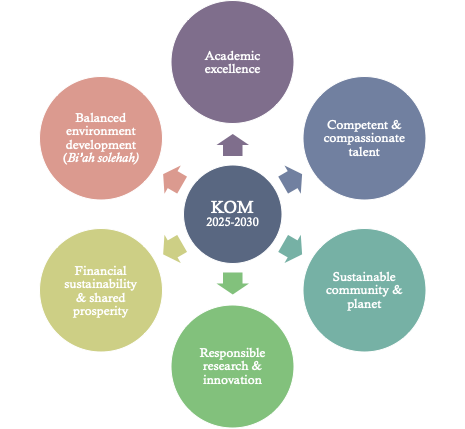
The Kulliyyah of Medicine (KOM) at the International Islamic University Malaysia (IIUM) has developed a transformative strategic framework for 2025–2030. Guided by the Tawhidic worldview, the framework integrates faith (iman), knowledge (‘ilm), and good character (akhlaq) into every aspect of its academic, research, and community engagement efforts. It aims to produce healthcare professionals who embody competence and compassion, recognising their responsibility as khalifah to serve humanity and protect the planet.
In an era defined by post-normal times, characterised by complexity, uncertainty, and chaos, this framework addresses the pressing need for resilience and adaptability in medical education. KOM aims to equip healthcare professionals with the skills, values, and ethical grounding needed to navigate the challenges of a rapidly changing world while upholding their commitment to humanity and the environment.
This framework focuses on six interconnected areas, ensuring a holistic and forward-looking approach to medical education and healthcare development.
Academic Excellence
KOM aims to achieve global recognition as a centre of academic excellence rooted in ethical and spiritual values. Tawhidic principles are embedded into curricula, with a focus on spirituality, clinical competence, and compassion. Continuous quality improvement will ensure the dynamic relevance of these academic programmes.
To enhance clinical training, KOM will adopt cutting-edge technologies such as simulation, virtual reality (VR), and augmented reality (AR). These tools will complement traditional clinical teaching methods, providing learners with immersive environments to refine their skills and prepare for complex and unpredictable healthcare scenarios. Structured workshops for faculty development will further strengthen teaching and assessment skills aligned with faith-based education.
Competent and Compassionate Talent
The framework underscores the importance of nurturing healthcare professionals who excel both technically and ethically. Compassionate care is embedded into academic and clinical assessments, ensuring learners deliver high-quality care while understanding the emotional and spiritual needs of their patients.
A comprehensive human resources and talent management plan is critical to this initiative. This includes planning at the kulliyyah and departmental levels to ensure staffing aligns with workload, preventing burnout and maintaining morale. Training programmes will equip heads of departments and faculty members with essential human resource and leadership skills. Engagement with higher authorities will ensure adequate staffing and resource allocation, supporting both staff motivation and institutional efficiency.
Balanced Environment Development (Bi’ah Solehah)
Creating a bi’ah solehah, or a balanced environment, is central to KOM’s vision. This includes nurturing a harmonious and respectful atmosphere within the KOM community. The practice of spreading salam (greetings of peace) is strongly encouraged, inspired by the hadith of Prophet Muhammad (peace be upon him):
“By Him in Whose Hand is my life! You will not enter Jannah until you believe, and you will not believe until you love one another. Shall I inform you of something which, if you do, you will love one another? Promote greetings (Salam) amongst yourselves.” (Sahih Muslim)
Infrastructure development will align with this vision by creating green-certified buildings and adaptive digital tools that support physical, mental, and spiritual well-being. These efforts ensure KOM remains a leader in fostering an Islamic and ethical environment.
Sustainable Community and Planet
Recognising the interconnectedness of human and planetary well-being, KOM is committed to embedding sustainability into its operations and community engagement. Faculty-led transformation programmes will address pressing social challenges, fostering resilience and health equity in underserved communities.
KOM will enhance its Gender Dysphoria projects, Sejahtera Wellness in Tembeling (SWIT) initiative, and Food Security in Pahang projects, strengthening its engagement with the communities it serves. These initiatives highlight KOM’s commitment to addressing critical health and social issues while promoting sustainability and community well-being. The curriculum will further integrate planetary health topics, equipping learners with the knowledge to tackle global environmental challenges.
Responsible Research and Innovation
KOM places a strong emphasis on producing high-quality research and disseminating knowledge globally. Faculty members are encouraged to contribute their expertise to reputable medical journals, ensuring KOM’s academic excellence is recognised internationally. High-impact research initiatives will address critical healthcare challenges, fostering interdisciplinary collaborations to drive innovation.
Innovation will be further promoted through the registration of intellectual property (IP) and the commercialisation of research outputs. These efforts aim to create tangible societal benefits by translating research outcomes into practical solutions, particularly in sustainable healthcare and planetary health.
Financial Sustainability and Shared Prosperity
KOM is committed to ensuring shared prosperity and financial sustainability to support its learners and community. Currently, KOM awards two scholarships that cover the tuition fees of two deserving learners, demonstrating its commitment to accessible education. Additionally, KOM has established the Tabung Penyayang, a fund dedicated to supporting the financial needs of other learners in the faculty. This initiative reflects the spirit of compassion and mutual assistance central to KOM’s mission.
To enhance financial sustainability, KOM plans to expand its trust fund development activities, aiming to generate RM1 million annually. Financial management training will be provided to departments to optimise resource use and efficiency. Further, KOM will continue to deepen partnerships with underserved communities through health outreach programmes, fostering equity and inclusivity.
A Vision for the Future
The KOM 2025–2030 Strategic Framework is a comprehensive and forward-thinking plan that positions the Kulliyyah as a leader in medical education. By aligning with the Tawhidic worldview, the framework redefines healthcare education to emphasise competence and compassion, while addressing the complexities of post-normal times.
Through its focus on academic excellence, talent development, balanced environment creation, sustainability, research innovation, and financial stability, KOM is well-equipped to meet the demands of the modern world. This framework reflects KOM’s unwavering dedication to the ummah, global society, and the planet, ensuring that its graduates are not only skilled professionals but also ethical leaders committed to serving humanity and fulfilling their divine responsibilities.
The International Islamic University Malaysia (IIUM) MBBS programme was recently accredited for another five years, with a revised curriculum set to launch for the 2025/2026 cohort. This new curriculum restructures the programme into the university’s three-semester academic system, aligning it with the broader university framework. It also emphasises practical and clinical skills in assessments and introduces a more interactive approach to Islamic input, replacing traditional didactic lectures. While clinical competency has been the primary focus of undergraduate medical training in Malaysia, IIUM is strengthening the compassionate component of its programme, ensuring a balanced approach.
The curriculum closely aligns with the vision and mission of the Kulliyyah of Medicine. The vision is to become a leading centre of educational excellence that enhances the dynamic and progressive role of physicians for the ummah. The missions include acquiring and propagating medical knowledge and skills in the spirit of tauhid (faith), nurturing balanced staff and students by integrating iman (faith), ‘ilm (knowledge), and akhlaq (good character), and fostering a culture that instils commitment to sustainable development, lifelong learning, and a deep sense of social responsibility for all mankind.
Under the guidance of Professor Emeritus Datuk Dr. Osman Bakar, the university’s seventh Rector, IIUM has embraced tawhidic epistemology as a guiding philosophy. This framework directs the MBBS curriculum towards divine unity (tawhid), ensuring that every aspect of the programme brings students, lecturers, patients, and staff closer to Allah. This further strengthens the concept of sejahtera introduced by the previous Rector, Tan Sri Dzulkifli Razak. Using the ADDIE framework—Analysis, Design, Development, Implementation, and Evaluation—this article outlines how the curriculum can integrate tawhidic principles to achieve this transformation.
Analysis: Identifying Current Needs
The first step in revising the curriculum involves analysing the programme’s current strengths and identifying areas for enhancement. IIUM’s recent accreditation and restructuring provide a strong foundation for this transformation. Key areas of focus include:
1. Aligning with the Three-Semester System
The new structure requires careful planning to retain the rigour and depth of medical education while integrating seamlessly into the broader university framework.
2. Interactive Islamic Input
Existing Islamic components need to move beyond didactic lectures to foster greater student engagement. Interactive methods can help students internalise Islamic principles and connect them to their medical practice.
3. Strengthening Compassion
Compassion is integral to medical practice, but it must be reframed as an expression of divine accountability, guiding interactions with patients and colleagues.
4. Spiritual Direction
The curriculum should ensure that every aspect of medical education—clinical skills, ethical reasoning, and interpersonal interactions—strengthens the spiritual connection of all involved with Allah.
5. Community Engagement
Incorporating structured opportunities for students to interact with communities helps them understand societal health needs, develop empathy, and foster a deeper sense of social responsibility.
Design: Structuring the Curriculum
With the analysis in place, the curriculum is designed to incorporate tawhidic epistemology and address the identified needs:
1. Philosophical Foundation
• Embed tawhid as the central philosophy of the programme, framing medical education as both a technical and spiritual journey.
• Articulate the curriculum’s vision and mission to reflect this integration.
2. Curricular Components
• Islamic Input: Shift from lectures to active learning methods, such as discussions, role-playing, and case-based learning, to engage students in the ethical and spiritual dimensions of healthcare.
• Clinical Competency: Ensure assessments are designed to evaluate technical skills and their application within an Islamic ethical framework.
• Compassionate Practice: Include reflective practice sessions that emphasise compassion as a manifestation of divine accountability.
3. Balanced Approach
• Balance technical and spiritual learning outcomes by incorporating interdisciplinary modules that link Islamic principles with medical sciences, such as modules on maqasid al-shariah (objectives of Islamic law) and patient-centred care.
Development: Preparing for Implementation
Once the curriculum design is finalised, resources and training materials must be developed to support its implementation:
1. Learning Resources
• Develop case studies and interactive learning materials integrating Islamic values into medical education.
• Create guides for students and lecturers to facilitate reflective practices and discussions on the spiritual dimensions of medicine.
2. Faculty Training
• Conduct workshops to prepare lecturers to incorporate tawhidic principles into their teaching.
• Train faculty to model compassionate care and ethical integrity in their interactions with students and patients.
3. Assessment Tools
• Redesign assessments to include evaluations of compassionate care, ethical reasoning, and technical competencies.
Implementation: Putting the Curriculum into Practice
The new curriculum is introduced in stages, ensuring smooth integration into the academic system:
1. Pilot Testing
Pilot the revised curriculum with a selected cohort to gather feedback and refine the programme before full-scale implementation.
2. Integration with the University Framework
Align the courses with the three-semester structure, ensuring that each semester builds on the previous one regarding technical and spiritual competencies.
3. Support Systems
Provide mentorship and peer support programmes to guide students and faculty through the transition to the new curriculum.
Evaluation: Measuring Outcomes
Evaluation ensures that the curriculum achieves its intended outcomes and identifies areas for continuous improvement:
1. Key Metrics
• Assess students’ clinical competence, ethical reasoning, and compassionate care.
• Measure how much the curriculum fosters spiritual growth and alignment with tawhidic principles.
2. Feedback
• Collect feedback from students, lecturers, and patients on how the new curriculum impacts their experiences and perceptions.
3. Periodic Review
• Conduct regular curriculum reviews to ensure alignment with institutional goals and the principles of tawhidic epistemology.
Leading the Way
IIUM’s revised MBBS curriculum marks a significant step forward in integrating clinical competence with Islamic principles of compassion and divine accountability. The new structure ensures assessments emphasise practical skills while Islamic input becomes more interactive and engaging. By aligning with tawhidic epistemology, the curriculum transforms medicine into a sacred endeavour, where every action—whether by students, lecturers, patients, or staff—strengthens their connection to Allah.
Competence, already well understood by the Kulliyyah of Medicine, is extended to include technical mastery and the spiritual well-being of practitioners and patients. Compassion, reframed as an expression of faith, becomes the practical manifestation of the curriculum’s philosophy. This integration ensures that IIUM graduates are skilled professionals and ethical and spiritually grounded individuals, prepared to serve humanity and Allah.